No Products in the Cart
Firm vs. Extra Firm Mattress
Written by Zulekha Nishad

Last Updated November 21, 2026
Firm and extra-firm mattresses sit right next to each other on the firmness scale, but they feel noticeably different once you lie down. A firm mattress still gives a little at the shoulders and hips; an extra-firm mattress feels close to flat, with almost no sink. Which one suits you depends mostly on how you sleep and how much you weigh, plus how much cushioning you like. This guide compares the two side by side, shows who each one tends to suit by sleep position and body weight, and explains how to soften a mattress that turns out too firm.
Quick answer
A firm mattress is about 7 to 8 on a 10-point firmness scale: supportive, with a thin layer of give on top. It suits many back and stomach sleepers, especially from about 180 lbs up. An extra-firm mattress is about 9 to 10: you rest on top of it with very little sink. It mostly suits heavier back and stomach sleepers, roughly over 230 lbs, and anyone who likes a very solid feel. Side sleepers and lighter sleepers usually find both too hard; Medium or a soft topper often works better for them.
Key Takeaways:
- Firmness is usually rated from 1 to 10. Firm mattresses are around 7 to 8 and extra-firm mattresses around 9 to 10, but scales aren't standardized, so compare within one brand.
- A firm mattress has a little cushioning on top; an extra-firm mattress has very little, so you sleep "on" it rather than "in" it.
- Firm tends to suit back and stomach sleepers and many heavier sleepers. Extra firm tends to suit back and stomach sleepers over about 230 lbs and people who want almost no sink.
- Body weight changes how firm a mattress feels: the same mattress feels firmer to a 130 lb sleeper than to a 250 lb sleeper.
- Durability, motion transfer and temperature depend more on the materials inside than on firmness alone.
- If a mattress is too firm, a soft or medium latex topper adds cushioning. Turmerry's latex mattresses are separate layers in a zip cover, so you can also swap a layer to change the feel.

Mattress Firmness Levels
Mattress firmness describes how much a mattress pushes back when you lie on it, or how far you sink in. It's often rated on a scale from 1 to 10, where 1 is extremely soft and 10 is the firmest. Most firm mattresses fall around 7 to 8, while extra-firm mattresses are rated about 9 to 10.

1-4Extra soft and soft: deep sink and plush cushioning
5-6Medium: a balance of cushioning and support
7-8Firm: supportive, with a thin layer of give
9-10Extra firm: very little sink, a nearly flat feel
Good to know
There's no industry standard for these numbers, so one brand's "firm" can feel like another brand's "extra firm." Your body weight matters too: a lighter sleeper barely presses into a firm mattress, so it feels harder to them than to a heavier sleeper. Compare firmness names within one brand, read its sleeper guidance, and use a home trial to confirm.
What Is a Firm Mattress?
A firm mattress gives you a solid, supportive surface with only a little cushioning on top. It uses denser materials and thinner or firmer comfort layers than a medium mattress, so your hips and shoulders sink in a little but not far. Many firm mattresses still have a soft cover or a quilted top, so they don't feel hard to the touch.

Pros of Firm Mattresses
Here's what many sleepers like about a firm mattress:
Even support
A firm surface holds you up evenly, so heavier parts of the body, like the hips, don't sink much further than the rest of you. Many sleepers find that feels stable and supportive.
Good for back and stomach sleepers
Back sleepers often like how a firm mattress keeps the lower back from sinking, and stomach sleepers like that it stops the hips from dipping into the bed.
Easy to move on
Because you don't sink in deeply, it's easy to turn over or get in and out of bed. Combination sleepers who change positions often appreciate that.
Durability
Firm comfort layers tend to hold their shape well, and a soft top layer usually shows body impressions sooner than a firm one. Materials matter most, though: dense natural latex, high-density foam and good coils last longer than low-density foam at any firmness.
Cons of Firm Mattresses
A firm mattress isn't for everyone. Keep these drawbacks in mind:
Adjustment period
If you're used to a softer bed, a firm mattress can feel hard for the first few nights. Most people need a few weeks to get used to a new mattress, which is why trials ask you to sleep on it for at least 30 nights first.
Less cushioning
Firm mattresses contour less, so lighter sleepers and side sleepers may feel pressure at the shoulders and hips. If you like a cradling, hug-like feel, firm may not be for you.
Heat with dense foam
Some firm mattresses use high-density memory foam, which can hold body heat. Breathable materials such as latex with pinholes, wool, cotton and coils let more air through. If you sleep hot on your current bed, a cooling mattress topper can help.
How Much Does a Firm Mattress Cost?
Firmness itself has little effect on price. What you pay depends mostly on the materials (latex, memory foam, coils or a hybrid), the size, the thickness and the brand. Natural and certified organic latex costs more upfront than foam, but it lasts a long time. On some Turmerry mattresses, the Extra Firm build costs a little more than Firm because it uses more Extra Firm latex. See how much a mattress costs for what drives price.
What Is an Extra-Firm Mattress?
An extra-firm mattress is the firmest option you can buy. It has very little cushioning, so you rest on top of the surface with almost no sink. Extra-firm mattresses use dense core materials, such as extra-firm latex, high-density foam or tightly packed coils, with little or no plush layer on top.

Pros of an Extra-Firm Mattress
Here's why some sleepers prefer extra firm:
Maximum support
Extra firm gives the most push-back of any firmness. Heavier sleepers, who press further into any mattress, often find extra firm feels about as supportive as firm feels to an average-weight sleeper.
Reduced sinkage
Your midsection stays up on the surface, which many heavier back and stomach sleepers prefer. It also means you won't feel "stuck" in the bed.
Longevity
Dense, firm materials resist sagging and body impressions. As with any mattress, how long it lasts depends on the quality of what's inside, not the firmness label alone.
Stable surface for couples
On a very firm surface, one partner's weight doesn't create a dip the other rolls toward. How much movement you feel from a partner depends mostly on materials: latex and foam pass on less motion than traditional innerspring.
Cons of an Extra-Firm Mattress
Here are the downsides to weigh before you choose extra firm:
Firmness sensation
Extra firm can feel too hard for many people, especially if you're used to a softer mattress or like an enveloping feel. If it feels like sleeping on the floor, it's probably too firm for you.
Not ideal for side sleepers
Side sleepers need some give at the shoulders and hips. On an extra-firm surface, those areas take most of your weight, which many side sleepers find uncomfortable.
Limited contouring
Extra firm barely adapts to the shape of your body. Lighter sleepers in particular don't press in far enough to feel any cushioning at all.
Temperature
Dense foam can hold body heat. Breathable materials, such as perforated latex, wool, organic cotton and coils, help an extra-firm mattress sleep cooler.
Adjustment period
Switching to extra firm can take several nights to a few weeks to get used to. Give it time, but if it still feels too hard after a month, it may simply be too firm for you.
How Much Does an Extra-Firm Mattress Cost?
Extra-firm mattresses cost about the same as firm ones from the same brand and material, sometimes a little more when the build uses more dense layers. As with firm mattresses, the material, size and thickness make the biggest difference to price.
Firm vs. Extra-Firm Mattress: Comparison Chart
Here's how the two usually compare. Treat it as a starting point; the materials and your body weight change how each one feels.
| Feature | Firm mattress | Extra-firm mattress |
|---|---|---|
| Firmness scale | About 7-8 out of 10 | About 9-10 out of 10 |
| Feel | Supportive, with a thin layer of give | Very solid, close to flat |
| Cushioning | Moderate | Minimal |
| Sinkage | A little at the shoulders and hips | Very little |
| Often suits | Back and stomach sleepers, combination sleepers, many heavier sleepers | Heavier back and stomach sleepers, people who want almost no sink |
| Body weight | Often about 180 lbs and up | Often over about 230 lbs |
| Side sleepers | Only heavier side sleepers; most prefer softer | Usually too firm |
| Motion transfer and durability | Depend mostly on materials | Depend mostly on materials |
Firm vs. Extra Firm by Sleep Position and Body Weight
Sleep position and body weight are the two biggest factors. This chart follows the firmness guidance on our 7 Zone Organic Latex Mattress page, so you can see where firm and extra firm fit, and where a softer mattress is the better answer.
| Body weight | Side sleepers | Back sleepers | Stomach sleepers | Combination sleepers |
|---|---|---|---|---|
| Under about 130 lbs | Soft | Soft | Medium | Soft |
| About 130-180 lbs | Soft, or Medium for more support | Medium | Medium | Medium |
| About 180-230 lbs | Medium | Firm | Firm | Medium, leaning Firm if mostly back or stomach |
| About 230-280 lbs | Medium, leaning Firm for more support | Firm; Extra Firm only if you want more support | Firm; Extra Firm only if you want more support | Firm |
| Over about 280 lbs | Firm, leaning Extra Firm for more support | Firm, or Extra Firm for maximum support | Extra Firm | Firm, leaning Extra Firm if mostly back or stomach |
Over about 230 lbs, a thicker mattress helps too: our guidance points to 12 inches, and our mattresses for heavier sleepers are built for it. See our mattress thickness guide for how height and firmness work together. Sharing the bed? Choose for how each of you sleeps, or pick a split size so each side can have its own firmness.
Who Should Choose a Firm Mattress
A firm mattress is often a good fit for:
Back sleepers
Especially from about 180 lbs up. A firm surface keeps the hips and lower back from sinking further than the rest of you, while the top layer still gives a little.
Stomach sleepers
A firm mattress stops the hips from dipping into the bed, which many stomach sleepers find more comfortable. Lighter stomach sleepers may prefer Medium.
Heavier side sleepers
Side sleepers with larger frames press further into any mattress, so Firm can feel more like Medium to them. Lighter side sleepers usually want more cushioning.
Combination sleepers
If you switch between your back and stomach, a firm surface makes it easy to move. If you spend time on your side too, Medium may be a better balance.
People who don't like sinkage
If you prefer a stable surface without much give, but still want a little cushioning on top, firm is a good middle ground.
Back pain?
Firmer isn't automatically better for your back, and no mattress firmness treats back pain. If you have back pain or another health condition, ask your doctor or physical therapist what kind of sleep surface and position suit you, then choose a firmness that feels comfortable.
Who Should Choose an Extra-Firm Mattress
Extra firm suits a narrower group of sleepers. It's often a good fit for:
Heavier stomach sleepers
Stomach sleepers over about 230 lbs often prefer extra firm, because it keeps the hips from sinking into the bed.
Heavier back sleepers
Back sleepers over about 230 lbs who find Firm too yielding may want extra firm. Many still prefer Firm, so start there if you're unsure.
People who prefer minimal sinkage
If you like to sleep on top of the bed with almost no contouring, extra firm gives you that very solid, stable feel.
People who find firm too soft
If you've tried Firm and still feel you're sinking in, extra firm is the next step. A thicker mattress can also help heavier sleepers feel more supported.
Careful
Extra firm is sometimes recommended for back problems, disc problems or scoliosis, but there's no single right firmness for these. If you have a back or spine condition, ask your doctor what sleep surface suits you before choosing extra firm.
Too Firm? How to Soften a Firm or Extra-Firm Mattress
If your mattress turns out firmer than you like, you don't have to replace it. Try these, in this order:
-
Give it a few weeks
A new mattress, and your body, need time to settle. Sleep on it for at least 30 nights before you decide. Our guide on how to break in a new mattress has tips.
-
Add a soft or medium topper
A 2 or 3 inch Soft or Medium latex topper adds cushioning at the shoulders and hips while the firm mattress underneath still holds you up. Side sleepers on a firm mattress often go for 3 inches. Our topper thickness guide helps you choose.
-
Swap a layer
On a zip-cover latex mattress, you can change the feel by changing the top layer. Turmerry's latex mattresses come with one free layer swap during the 365-night trial, so you can trade an Extra Firm top layer for a Firm one, or a Firm one for Medium.
More ideas, from bedding to the base underneath, are in our guide on how to make a firm mattress softer.
Turmerry's Firm and Extra Firm Mattresses
Most Turmerry mattresses come in a Firm option, and many in Extra Firm too. Heights include the organic cotton cover and are approximate.
| Mattress | Height | Firm and Extra Firm options | Good fit for |
|---|---|---|---|
| 7 Zone Organic Latex Mattress | 7, 10 or 12 inches | 7": flippable Firm / Extra Firm (3" Extra Firm and 3" Firm layers). 10": Firm (3" Extra Firm, 3" Firm, 3" Firm) or Extra Firm (3" Extra Firm, 3" Extra Firm, 3" Firm). 12": the 10" build plus a 3" Extra Firm base layer | Back and stomach sleepers; 12" for heavier sleepers |
| Dual Side Latex Flippable | 7 inches | Firm / Extra Firm, one feel on each side | Anyone who wants to try both feels in one mattress |
| Organic Egg Crate Mattress | 10 or 12 inches | Firm or Extra Firm builds with an egg crate latex top | Sleepers who want firm support with a contoured surface |
| Bigg+ Natural Latex Mattress | 12 inches | Three 3" Extra Firm layers with a Medium Firm, Firm or Extra Firm top | Sleepers over about 230 lbs |
| DIY Hybrid Mattress With Latex | 10 or 12 inches | Firm or Extra Firm latex comfort layer over pocket coils | Sleepers who want coil bounce with a firm latex feel |
| RV Mattress | 7 or 10 inches | Firm (Medium also available; no Extra Firm) | RVs, campers and bunks |
| Organic Kids Mattress | 7 inches | Firm (Soft and Medium also available) | Kids, teens and bunk beds |
Our all-latex mattresses use GOLS-certified organic Dunlop latex in separate layers inside a zippered organic cotton cover. You can unzip the cover, see every layer and rearrange them to fine-tune the feel without buying a new mattress. The 7 Zone and Egg Crate also come in Split Queen and Split King, with one cover and separate layers on each side, so partners can choose different firmness levels.
Not sure between Firm and Extra Firm?
Start with Firm unless you weigh over about 230 lbs and sleep on your back or stomach. If Firm feels too soft after a few weeks, ask for a free layer swap to an Extra Firm top layer. Or choose the 7-inch Firm / Extra Firm flippable mattress and try both sides.
Good to know
Every Turmerry mattress comes with a 365-night trial (sleep on it at least 30 nights first), free shipping in the contiguous US, and the option of 110% store credit on a return; see shipping and returns. Most orders ship the same business day from Charlotte, NC. Sleep Foundation named the Dual Side Flippable "Best Mattress for Pressure Relief" in 2026, with an 8.9/10 score. Sleep Foundation may have an affiliate relationship with Turmerry.
The Bottom Line
Choosing between a firm and an extra-firm mattress comes down to how much give you want. A firm mattress gives solid support with a little cushioning on top, which suits many back and stomach sleepers and heavier sleepers. An extra-firm mattress gives the most support and the least cushioning, which mostly suits back and stomach sleepers over about 230 lbs and people who like a very solid feel.
If you're unsure, Firm is the safer place to start: it's easier to firm up with a layer swap, or soften with a topper, than to live with a mattress that's too hard. Consider your sleep position, body weight and comfort preferences, and if you have a health condition, ask your doctor what suits you. Questions about Turmerry firmness? Call us at 984-299-6850 or visit our showroom in Charlotte, NC.
Frequently Asked Questions

SHOPPING FOR A NEW MATTRESS?
Choose 7, 10 or 12 inches and swap layers to change the feel. 365-night trial, free pillows with every mattress.
$719.20 $899.00From. Code BF20 is added at checkout.
Get exclusive offers by email
Sale alerts and new sleep guides. Unsubscribe anytime.
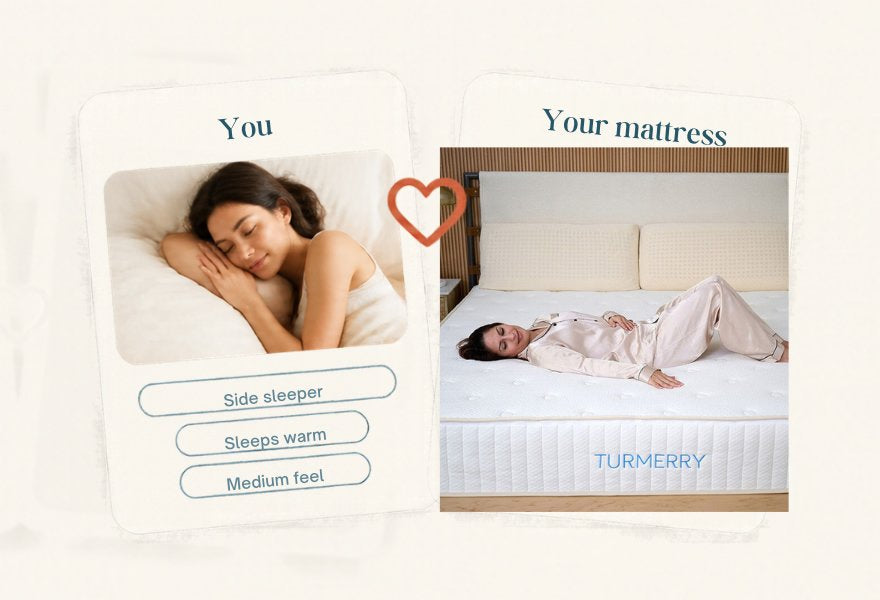
Shop what's in this guide
 7 Zone Organic Latex Mattress$719.20
 7 Zone Latex Mattress Topper$84.15
 Organic Waterproof Mattress Protector$50.15
 Organic Latex Pillow$83.30
Starting prices. Sale codes BF20 and BF15 are added at checkout.
Related blog posts:
1. How to Make a Firm Mattress Softer
2. How to Break in a New Mattress?

3. How Much Does a Mattress Weigh?
Disclaimer: What is said in this article has been referenced from multiple sources and is intended only for educational and informational purposes. Please note that no content in this article is a substitute for professional advice from a qualified doctor or healthcare provider. Always consult an experienced doctor with any concerns you may have regarding a health condition or treatment, and never disregard any medical suggestions or delay in seeking treatment because of something you read here.
