No Products in the Cart



Last Updated October 12, 2026
Choosing the right blanket size shouldn’t be a guessing game. Whether you’re curling up on the couch or adding that final touch to your bed, the perfect fit matters. This quick guide (which includes a detailed blanket size chart) will help you explore the world of blanket sizes with ease. Let’s find your perfect match and wrap you in utmost comfort!
Key Takeaways:

You'll need to familiarize yourself with all the blanket sizes popular with consumers, so here is the table of blanket types and their sizes.
| Blanket Type | Blanket Sizes (Inches) | Blanket Sizes (Centimetres) |
|---|---|---|
| Lovey | 12 x 12 inches | 30 x 30 cm |
| Baby | 14 x 16 inches | 36 x 41 cm |
| Cradle | 14 x 30 inches | 36 x 76 cm |
| Premie | 18 x 24 inches | 46 x 61 cm |
| Stroller | 22-30 x 30-36 inches | 51-76 x 76-91 cm |
| Lapghan | 36 x 48 inches | 91 x 122 cm |
| Receiving | 40 x 40 inches | 102 x 102 cm |
| Crib | 45 x 60 inches | 114 x 152 cm |
| Throw | 50 x 60 inches | 127 x 152 cm |
| Afghan | 50 x 65 inches | 127 x 165 cm |
| Twin | 65 x 90 inches | 165 x 229 cm |
| Double | 85 x 90 inches | 216 x 229 cm |
| Queen | 90 x 90-100 inches | 229 x 229-254 cm |
| King | 108 x 90-100 inches | 274 x 229-254 cm |
Blankets for the four standard mattresses are readily available online or in retail stores across the US.
However, finding blankets for special sizes, like the California king or the Olympic queen, is hard. You either have to sift through a bunch to find blankets that fit the specialty mattresses, or you can crochet your own blanket.

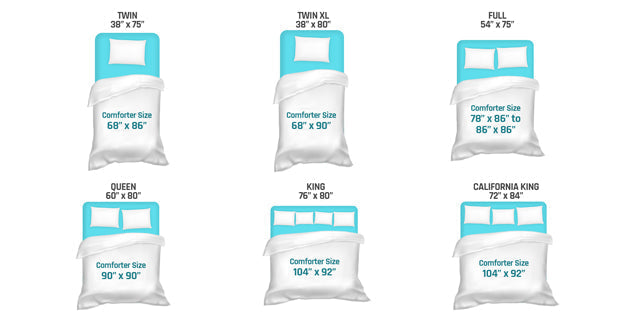
The twin-size blanket is 65 inches wide and 90 inches long - so it's made to fit on a twin bed or a twin XL bed. It is wide enough that it hangs down the sides of the bed and so long that it wraps the entire body of a tall person.
The double or full-size blanket is big enough to cover a full-size mattress. The full blanket size dimensions are 85 inches wide and 90 inches long. So, they may fit snugly on a thick full bed or a regular queen bed.
The dimensions of queen blankets are 90 inches wide and 90-100 inches long. It is big enough to be used comfortably on a thick full bed, a regular queen bed, a thick queen bed, and a thin king bed. As you can see, this is a versatile blanket size.
The king-size blanket dimensions are 108 inches wide and 90-100 inches long. So, a king-size blanket is massive - big enough for a thick and regular king bed or a California king bed. In fact, if you don't mind the snug fit, you can also use it with Wyoming King and Texas King mattresses.
Home decor enthusiasts will perk up at the mention of these blankets. Throw blankets come in beautiful and colorful patterns - people prefer them so much since their vibrancy lights up a house, and they are super comfortable to curl up with.
Crocheted throws are the most coveted pieces of bedding, but you'll find that knitted throws come in various fabrics.
The Afghan blanket is the most coveted variety of throw blankets. An Afghan is a costly throw, but vibrant colors, intricate crochet designs, and the warmth of karakul wool make it worth every penny. The blanket dimensions of an Afghan are 50 inches wide and 65 inches long; they are great as couch cozies or as a thin blanket.

The Lapghan is sized at 36 inches wide and 48 inches long - its purpose is to provide comfort as a lap blanket. You'll find it is popular with wheelchair users, bedridden people, or hospice patients. But really, anyone can use it.

A standard throw blanket is 50 inches wide and 60 inches long. It's not necessarily crocheted, but you'll find that a regular throw blanket adds a dash of color to your room. It can be placed on a bed or as a shawl or a lap layer while leisurely lounging.

From keeping a preemie secure in the Neonatal Intensive Care Unit (NICU) to comforting a sleeping toddler, baby blankets have a wide range of functionality. That's why there are a handful of standard baby blankets, and with good reason. So let's see what those are.
A lovey blanket, also known as a security blanket, is ideal for one-year-old infants. This 12-inch by 12-inch baby blanket size comes with a toy attached to it or a stuffed animal head crocheted with the blanket. The design is an ingenious blanket idea because it keeps the child's attention occupied with the toy, thus making it relatively easy for new parents to look after the baby. Win-win for both the child and the parents, right?
As the name suggests, cradle blankets form the cozy, protective layers of an infant's cradle. The blanket dimensions are 14 inches wide and 30 inches long, and the blankets generally appear printed with cartoon figures.

Premature babies are extremely sensitive medical cases, so after their delivery, they must be wrapped in materials that keep them safe in the Neonatal Intensive Care Unit (NICU). Thus, a preemie blanket was explicitly designed to serve this purpose. The blanket is made of delicate baby yarn and measures 18 inches by 24 inches. Until the baby is out of the danger zone and gets discharged, the hospital uses a premie blanket to keep the baby warm and cozy.
The stroller blanket dimensions are 22-30 inches and 30-36 inches. These blankets are long enough to cover the entire length of the baby when they are in the stroller. Alternatively, parents use this long blanket to tuck the babies when they are cradled and outside for a walk.
This is the blanket a baby is usually wrapped in. This 40 x 40 inches baby blanket size is usually made of cotton, so the fabric is relatively thin yet utterly comforting. A good-quality receiving blanket can lull a baby to sleep easily because of its softness.
As this blanket is thin and large, parents tend to use it as a burp cloth, tummy time blanket, and swaddling blanket.
Growing babies above six months who have been promoted to a crib or a toddler bed need a crib blanket. It is 45 inches wide and 60 inches long and is made from good-quality fabric. A crib blanket can also be used as a floor blanket when the babies are cooking up a storm while playing on the floor.

Related blog posts:
3. Mattress Sizes and Bed Dimensions

5. Your Guide to Buying the Perfect Pillow Case Sizes

Disclaimer: What is said in this article has been referenced from multiple sources and is intended only for educational and informational purposes. Please note that no content in this article is a substitute for professional advice from a qualified doctor or healthcare provider. Always consult an experienced doctor with any concerns you may have regarding a health condition or treatment, and never disregard any medical suggestions or delay in seeking treatment because of something you read here.