Mattress Size Chart
| MATTRESS SIZE |
DIMENSIONS (Width x Length) |
| Twin |
38 x 75 inches |
| Twin XL |
38 x 80 inches |
| Full |
54 x 75 inches |
| Queen |
60 x 80 inches |
| King |
76 x 80 inches |
| California King |
72 x 84 inches |
Key Takeaways:
- Standard US mattress sizes include Twin, Twin XL, Full, Queen, King, and California King.
- Twin mattresses (38 x 75 inches) are a great choice for children, teenagers, and single sleepers.
- Twin XL mattresses (38 x 80 inches) are ideal for taller single sleepers and college dorm rooms.
- Full mattresses (54 x 75 inches) are a spacious choice for single sleepers in studio apartments.
- Queen mattresses (60 x 80 inches) are a great choice for couples, and the most popular mattress size in the US.
- King mattresses (76 x 80 inches) are a more spacious choice for couples, and also suit families with small children or pets.
- California king mattresses (72 x 84 inches) are recommended for couples or families with tall sleepers who need more legroom.
Twin Mattress
Twin Mattress Dimensions: 38 x 75 inches
-
Minimum Recommended Room Size: 7 x 10 feet
-
Bed Frame Size: 40-43 x 77-80 inches
-
Budget: $300 to $700 (Standard) | $750 to $1,200 (Premium Natural Latex)
- Twin Size Bed Dimensions Guide
A twin-size mattress, also known as a single mattress, is 38 inches wide and 75 inches long. It's the smallest of all the standard mattress sizes and meant for a single sleeper. A twin mattress is best for kids outgrowing their crib. Children and teens can keep on using twin mattresses well into adulthood. It also works for single adults (under 6 feet tall) who have very limited bedroom space.
[Shop Twin Mattresses]
Twin XL Mattress
Twin XL Mattress Dimensions: 38 x 80 inches
-
Minimum Recommended Room Size: 7 x 10 feet
-
Bed Frame Size: 40-43 x 82-85 inches
-
Budget: $350 to $800 (Standard) | $850 to $1,300 (Premium Natural Latex)
- Twin XL Bed Dimensions Guide
A twin XL mattress is 38 inches wide and 80 inches long, making it 5 inches longer than standard twin-size mattresses. This length difference contributes to the XL’s popularity in college dorms. Basically, teens who go through growth spurts outgrow their previous mattresses, so the next most popular choice is a twin XL. It can accommodate kids up to 6 feet 5 inches tall, so plenty of legroom is assured.
[Shop Twin XL Mattresses]
Full Mattress
Full-Size Mattress Dimensions: 54 x 75 inches
-
Minimum Recommended Room Size: 9 x 10 feet
-
Bed Frame Size: 56-59 x 77-80 inches
-
Budget: $500 to $1,100 (Standard) | $1,100 to $1,700 (Premium Natural Latex)
- Full Size Bed Dimensions Guide
A full-size mattress, also called a double mattress, is 54 inches wide and 75 inches long. The mattress is called "full size" or "double" because it used to be the standard sleeping mattress for couples way back in the 1940s. But since then, the queen-size has taken over that title. Nowadays, a double bed is a spacious choice for solo sleepers, especially active ones who move around a lot and change their sleeping position a bunch (i.e., combination sleepers).
[Shop Full-Size Mattresses]
Queen Mattress
Queen-Size Mattress Dimensions: 60 x 80 inches
-
Minimum Recommended Room Size: 10 x 10 feet
-
Bed Frame Size: 62-65 x 82-85 inches
-
Budget: $600 to $1,500 (Standard) | $1,300 to $2,200 (Premium Natural Latex)
- Queen Size Bed Dimensions Guide
A queen mattress is 60 inches wide and 80 inches long. It's currently the most popular mattress size in the US, offering a budget-friendly option for couples to sleep comfortably together without running into space issues. Both partners will have ample legroom and width to reposition themselves without waking the other, or worse, pushing them off the bed!
[Shop Queen Mattresses]
Pro tip: Go for a split queen mattress (two separate mattresses, each 30 x 80 inches, forming a queen-sized bed) if you and your partner have different firmness/thickness preferences.
King Mattress
King-Size Mattress Dimensions: 76 x 80 inches
-
Minimum Recommended Room Size: 12 x 12 feet
-
Bed Frame Size: 78-81 x 82-85 inches
-
Budget: $800 to $2,000 (Standard) | $1,600 to $2,800 (Premium Natural Latex)
- King Size Bed Dimensions Guide
A king mattress is 76 inches wide and 80 inches long. Being significantly wider than a queen mattress, it's a great choice for couples who want plenty of space to sprawl out. It's also great for families who sleep together (parents, kids, pets, and all). The king is the most spacious bed in its class, with no other bed matching its 76-inch width. And to accommodate something of this size, you'll ideally need a master bedroom.
[Shop King Size Mattresses]
Pro tip: Go for a split king mattress (two twin XL mattresses together that form a king-sized bed) if you and your partner have different firmness/thickness preferences.
California King Mattress
California King Mattress Dimensions: 72 x 84 inches
-
Minimum Recommended Room Size: 12 x 12 feet
-
Bed Frame Size: 74-77 x 86-89 inches
-
Budget: $800 to $2,000 (Standard) | $1,600 to $2,800 (Premium Natural Latex)
- California King Bed Dimensions Guide
A California King mattress is 72 inches wide and 84 inches long. It's the 4-inch-narrower but 4-inch-longer version of the standard king mattress. The extra length of the Cal king size can be a big advantage for people 6 feet tall or taller, as it gives them more room to stretch their legs out. But for this additional length, you have to trade off a bit of the width. So, instead of comfortably accommodating a family of four, as the standard king can, the Cal king only accommodates a family of three. It's still great for couples, though!
[Shop California King Mattresses]
Pro tip: Go for a split California king mattress (two separate mattresses, each 36 x 84 inches, forming a cal king-sized bed) if you and your partner have different firmness/thickness preferences.
What Is the Best Mattress Size for You?
Choosing the right mattress size comes down to five things.
1. Consider how much space you have in your room. A king-size mattress in a small bedroom leaves no room to move around, and a twin in a large room is a waste of space. Measure your room before anything else. Make sure the mattress leaves at least 2 feet (24 inches) of clearance on the sides and foot of the bed.
2. Consider how many people will use the mattress. A single sleeper has plenty of room on a twin and a full. Two adults sharing a bed need at least a queen, or a king if either partner moves around a lot at night and wants more personal space.
3. Consider your body weight(s) and height(s). Taller sleepers over 6 feet need a longer mattress, which rules out a standard twin or full in favor of a twin XL, queen, king, or Cal king. Heavier sleepers need a mattress with a higher weight capacity, which varies by size. Larger mattresses, like a queen, can support more weight than smaller ones, like a twin.
4. Consider long-term plans. If you're moving soon, especially to a bigger place, sizing up now saves you from having to buy again in a year. A queen works in most bedrooms. A king needs a larger room so as not to feel cramped.
5. And finally, consider your budget. Larger mattresses cost more, and so does the bedding that goes with them. A queen is the best balance of space and cost for most people. A king is worth the investment if you share a bed and have the room for it.
Here's a little infographic to help you out with picking the correct mattress size for your lifestyle:
Bed Sizes in Feet & Centimeters (Table for Reference)
This table covers all the standard US mattress sizes in feet and in centimeters.
| MATTRESS SIZE |
DIMENSIONS IN FEET
(Width x Length) |
DIMENSIONS IN CM
(Width x Length) |
| Twin |
3.17 x 6.25 feet |
96.52 x 190.5 cm |
| Twin XL |
3.17 x 6.67 feet |
96.52 x 203.2 cm |
| Full |
4.5 x 6.25 feet |
137.16 x 190.5 cm |
| Queen |
5 x 6.67 feet |
152.4 x 203.2 cm |
| King |
6.33 x 6.67 feet |
193.04 x 203.2 cm |
| California King |
6 x 7 feet |
182.88 x 213.36 cm |
Non-Standard Mattress Sizes (Table for Reference)
This table covers all the popular non-standard mattress sizes available today.
| NON-STANDARD MATTRESS SIZE |
DIMENSIONS (Width x Length) |
| Crib |
28 x 52 inches |
| Full XL |
54 x 80 inches |
| California Queen |
60 x 84 inches |
| Olympic Queen |
66 x 80 inches |
| Super King |
72 x 78 inches |
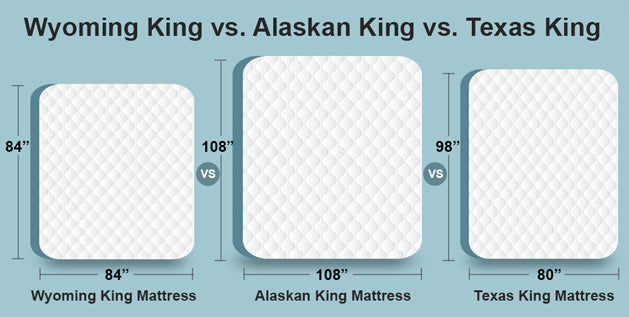
| Wyoming King |
84 x 84 inches |
| Texas King |
80 x 98 inches |
| Vermont King |
96 x 96 inches |
| Alaskan King |
108 x 108 inches |
Before we conclude, note that we have a separate international mattress size guide and a mattress sizes Canada guide that you might want to check out for further comparison.
Frequently Asked Questions
The standard mattress sizes in the US are twin, twin XL, full, queen, king, and California king. A twin (38 x 75 inches) is ideal for kids and teens. A twin XL (38 x 80 inches) is great for tall single sleepers. A full (54 x 75 inches) is a spacious choice for solo sleepers. A queen (60 x 80 inches) is perfect for most couples. A king (76 x 80 inches) is a spacious choice for couples and families who co-sleep. A California king (72 x 84 inches) is for couples and families with tall sleepers.
The queen size mattress is the most popular mattress size on the market today. It's 60 inches wide and 80 inches long, making it a spacious yet budget-friendly option for couples. And it can fit in master bedrooms as well as regular bedrooms, needing only 10 x 10 feet of space.
The full size mattress is the best mattress size for single sleepers. Its 54-inch width offers plenty of space to move around, and its 75-inch length provides enough legroom for most people. For tall single sleepers, a full XL is better, as it has 5 inches of extra length.
The queen size mattress (60 x 80 inches) is the best mattress size for couples who share the bed. It gives both partners enough room to sleep comfortably without needing a large bedroom or a large budget. For couples who want more personal space, a king size mattress (76 x 80 inches) is worth the upgrade.
For couples with different firmness preferences, a split queen mattress or split king mattress would be a better option. Two separate mattresses side-by-side, each customized to the sleeper on it, in one bed frame.
The queen size mattress (60 x 80 inches) is the best mattress size for guest rooms. It comfortably fits up to two guests. It also works well in most standard bedroom sizes and doesn't require specialized bedding. If the guest room size is smaller, a full size mattress is a good alternative.
A workable bedroom needs at least 2 feet of clearance on the sides and foot of the bed for comfortable movement. A nightstand on each side of the bed needs about 2 feet of width each.
A dresser needs roughly 3 to 4 feet of wall space plus clearance in front to open drawers. A wardrobe needs similar wall space plus at least 3 feet in front to open doors. If you're adding a desk or seating area, factor in another 4 to 6 feet of floor space.
The minimum recommended room sizes by mattress size are 7 by 10 feet for a twin or twin XL, 9 by 10 feet for a full, 10 by 10 feet for a queen, and 12 by 12 feet for a king or California king. Adding large dressers, wardrobes, desks, etc., will require rooms larger than these minimums.
Weight capacity varies by mattress size, but construction and materials also factor in. These are the average ranges for each standard size:
- Twin: 250 to 300 lbs.
- Twin XL: 250 to 300 lbs.
- Full: 400 to 500 lbs.
- Queen: 500 to 600 lbs.
- King: 600 to 700 lbs.
- California King: 600 to 700 lbs.
A high-quality latex mattress will hold up better under sustained weight than a cheap foam mattress with the same listed capacity, since denser materials resist compression longer.
Technically yes, but it's going to be cramped for average-sized couples. A full is 54 inches wide, which splits to just 27 inches per person. That's not a lot of room. If you and your partner are both small and neither of you moves around much, you can make it work.
Long-term, a full size is really a solo sleeper's mattress, offering extra sleeping space for an average-sized adult. If you sleep together often, choose a queen bed instead. The extra 6 inches of width makes more of a difference than it sounds. Or go for a king bed if you want the most spacious sleeping arrangement.
The largest mattress size available is the Alaskan king mattress (108 x 108 inches). It's a non-standard, specialty size that isn't widely available and requires custom bedding.
Suggested Read: Biggest Bed Size
For most adults, yes. A full is 54 inches wide compared to a twin's 38 inches, giving you 16 extra inches of sleeping surface. A twin still makes sense for kids/teenagers/bunk beds, or even for single adults in very small spaces. But if the room can accommodate it, a full is the better choice.
Disclaimer: What is said in this article has been referenced from multiple sources and is intended only for educational and informational purposes. Please note that no content in this article is a substitute for professional advice from a qualified doctor or healthcare provider. Always consult an experienced doctor with any concerns you may have regarding a health condition or treatment, and never disregard any medical suggestions or delay in seeking treatment because of something you read here.