No Products in the Cart



Last Updated September 20, 2026

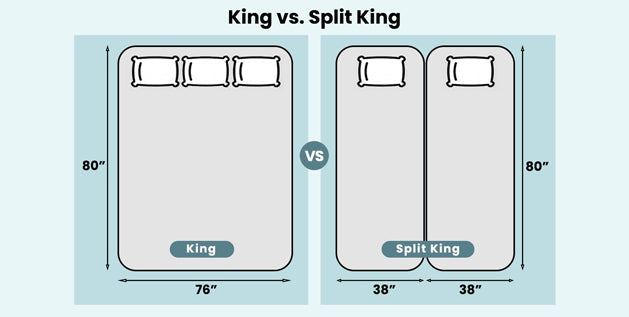
A king size bed measures 76 inches wide and 80 inches long, making it the widest standard mattress size available. It gives each sleeper 38 inches of personal space, which is the same width as a twin XL bed. If you and your partner like to spread out, or if you co-sleep with children/pets, a king bed is hard to beat. Just make sure your bedroom has enough space, as king beds work best in larger rooms.
[Shop King Size Mattresses] [Mattress Sizes Chart & Guide]
Key Takeaways:
| KING SIZE BED | DIMENSIONS |
|---|---|
| Dimensions in inches | 76 x 80 inches |
| Dimensions in feet | 6.33 x 6.67 feet |
| Dimensions in cm | 193.04 x 203.2 cm |
Not sure if a king is the right fit? Here's how it compares with other popular mattress sizes.
| MATTRESS SIZE | DIMENSIONS (W x L) | MINIMUM ROOM SIZE | BEST FOR |
|---|---|---|---|
| King Mattress | 76 x 80 inches | 12 x 12 feet | Couples who want maximum personal space, families who co-sleep with kids/pets |
| Queen Mattress | 60 x 80 inches | 10 x 10 feet | Couples, single adults who prefer extra sleeping space |
| California King Mattress | 72 x 84 inches | 12 x 12 feet | Taller couples and families with individuals over 6 feet |
A king mattress is an excellent choice if you have a lot of extra room space. It's well-suited to couples who don't want to feel cramped at night.
A king size bed needs a compact master bedroom measuring at least 12 feet by 12 feet to give you enough clearance for everyday movement. A standard master bedroom (12 by 14 feet) provides even more flexibility for additional furniture like nightstands and dressers.
King mattresses also cost more than smaller sizes. A standard king mattress ranges from $800 to $2,000, while premium latex and hybrid models cost around $1,600 to $2,800 or more. In addition to the mattress, you'll also need a king size bed frame and other bedding accessories, like a mattress protector, so it's worth budgeting for the complete sleep setup.

A king size bed gives you more room to stretch out, but it also takes up more space and requires larger bedding. Before you buy one, make sure it fits both your bedroom and the way you sleep.
If you and your partner prefer more room to stretch out while you sleep, a king bed is definitely worthwhile. Each sleeper gets 38 inches to themselves, compared to 30 inches on a queen, making it easier to move around without disturbing the other person. The extra space is also useful if you co-sleep with small children or pets.
A king mattress fits best in a bedroom that's at least 12 x 12 feet. Avoid rooms smaller than that, as you'll end up with limited walking space and difficulty opening doors/drawers/closets. If your bedroom measures 12 x 14 feet or larger, you'll be able to create a more spacious layout.
King bed frames measure 78-81 inches wide and 82-85 inches long. Before buying, make sure the frame is designed for a standard king mattress. If you plan to use an adjustable base, ensure that your mattress is compatible with it. Most latex, memory foam, and hybrid mattresses work well with adjustable bases. Innersprings don't.
Note: If you're buying a split king mattress, make sure you choose a split king-compatible bed frame. A split king consists of two twin XL mattresses placed side by side.
Side sleepers need a softer bed for more pressure relief around the shoulders and hips. Back and stomach sleepers benefit from a firmer bed that keeps the spine supported. If you and your partner have different sleep preferences, settle on a medium-firm or consider a split king setup. A 10 to 12-inch mattress thickness is recommended for couples. If you weigh more or want extra support, a thicker mattress will be the better choice.
Suggested Read: Mattress Thickness Guide
Once you've chosen your king mattress, the right accessories can protect your investment and complete your bedroom setup.
A king mattress weighs more than other smaller sizes, so it needs a sturdy frame with proper center support to prevent sagging. If you have a memory foam, latex, or hybrid mattress, a platform bed with closely spaced slats works well. Innerspring mattresses may require a box spring.
A topper can make a firm bed feel softer and provide extra pressure relief. It can also do the opposite by providing extra support, but keep in mind that it won't fix a mattress that's already worn out.
If you're happy with your mattress but want a touch more comfort, get a mattress pad. It adds a light layer of cushioning while protecting the mattress surface from everyday wear.
A waterproof mattress protector helps guard against spills, sweat, dust, and allergens without changing how the mattress feels. It's especially useful for households with children and pets.
Cotton sheets are soft and breathable, making them suitable for most sleepers. Before buying sheets, check how thick your mattress is. Deep-pocket sheets provide a better fit for thicker beds.
A comforter provides warmth while giving your bed a finished look. Lightweight options are ideal for warmer climates, while heavier comforters are better suited for cooler weather.
Washing a comforter can be difficult, but a duvet cover makes maintenance much simpler. It protects the comforter from everyday dirt and is much easier to remove and wash.
Along with the standard king, there are options like the California king, split king, Texas king, and other oversized king mattresses. Here's a quick look at the dimensions of each:
| KING MATTRESS VARIANT | DIMENSIONS (W x L) |
|---|---|
| Standard King Mattress | 76 x 80 inches |
| RV Short King Mattress | 72 x 75 inches |
| Super King Mattress | 72 x 78 inches |
| California King Mattress | 72 x 84 inches |
| Split King Mattress | 76 x 80 inches (two twin XL mattresses) |
| Texas King Mattress | 80 x 98 inches |
| Wyoming King Mattress | 84 x 84 inches |
| Alaskan King Mattress | 108 x 108 inches |

If you're ready to upgrade your sleep, explore Turmerry's collection of GOLS-certified organic king latex mattresses. Available in multiple firmness options, they're designed to provide long-lasting comfort, responsive support, and exceptional durability for years to come.
Related blog posts:
1. Mattress Sizes and Bed Dimensions


3. King vs. Split King Mattress
4. King vs. California King Mattress

5. Super King vs. King Size Beds

Disclaimer: What is said in this article has been referenced from multiple sources and is intended only for educational and informational purposes. Please note that no content in this article is a substitute for professional advice from a qualified doctor or healthcare provider. Always consult an experienced doctor with any concerns you may have regarding a health condition or treatment, and never disregard any medical suggestions or delay in seeking treatment because of something you read here.

