No Products in the Cart
How Much Does a Mattress Weigh?
Written by Zulekha Nishad

Last Updated November 4, 2026
When you shop for a mattress, weight usually comes well after comfort, support and price. But it matters the day your mattress arrives, every time you rotate it, and whenever you move house. It also affects which bed frame you need. This guide gives typical mattress weights by type and size, explains what makes one mattress heavier than another, and shares practical tips for handling a heavy mattress.
Quick answer
Most mattresses weigh about 40 to 190 pounds, depending on size, type and thickness. As a typical guide, a Queen weighs about 60–110 lbs as an innerspring, 70–130 lbs as memory foam, 90–145 lbs as a hybrid and 100–160 lbs as all-latex. Kings weigh roughly a quarter more than Queens, and thick, dense all-latex Kings can pass 200 lbs. These are typical ranges that vary by build, so check the maker's figure for your exact model.
Key Takeaways:
- Mattress weight depends mostly on size, type and thickness. Larger sizes, thicker builds and denser materials all add pounds.
- Typically, innerspring mattresses are the lightest standard type, followed by memory foam and hybrids. All-latex mattresses are usually the heaviest.
- Mattress weight is not the same as weight capacity (how much weight a mattress can hold). Your bed frame's limit has to cover the mattress, bedding and sleepers together.
- A heavier mattress isn't automatically better. Weight reflects how dense the materials are and how much material there is, not quality on its own.
- Lift a full-size or larger mattress with two people, and use a dolly, a mattress bag and a planned route for longer moves.
- Zip-cover latex mattresses, like Turmerry's all-latex models, come apart into separate layers and ship in several boxes, which makes them much easier to carry.

Why Does Mattress Weight Matter?
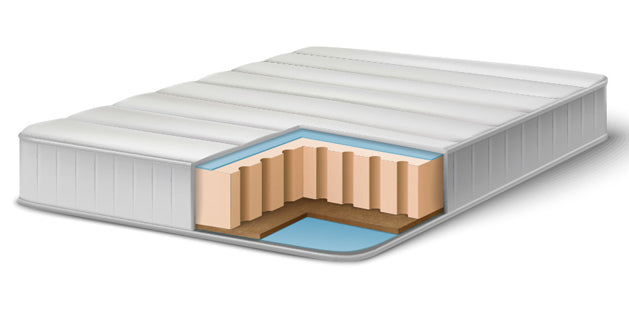
Mattress weight is simply how heavy a mattress is. It varies a lot with size, materials and construction: the type of foam or latex, whether there are coils, how many layers there are, and the overall mattress thickness.
Memory foam and latex mattresses are usually denser and heavier than traditional innerspring models, and weight goes up with size, from Twin to King.

Knowing roughly what your mattress weighs helps in four practical ways:
Moving and setup
It tells you whether you need a helper, a dolly or a different plan for stairs and narrow halls.
Rotating
Most mattresses should be rotated every few months. A heavy one is easier to turn with two people.
Bed frame
A frame's weight limit usually includes the mattress and bedding as well as the people on it, so a heavy mattress uses up more of that limit.
Delivery
Weight and box size affect how a mattress ships and how easy it is to get from your door to the bedroom.
How Much Do Mattresses Weigh? (By Type)
Different materials and construction methods give each mattress type a different weight. These are typical ranges across common sizes (Twin to California King) for standard 8 to 12 inch builds. Individual models can fall outside them.
40–135 lbsInnerspring
40–170 lbsMemory foam
50–180 lbsHybrid
60–190+ lbsAll-latex
1. Innerspring Mattresses
Innerspring mattresses rely on a coil system for support, usually with thin padding or foam on top. The coil unit is mostly open space, so these tend to be the lightest standard mattresses.

Typical weight: about 40–135 pounds, depending on size.
Why it's lighter: the open coil design uses less dense material. Thick pillow tops and extra foam layers add weight.
2. Memory Foam Mattresses
Memory foam mattresses are made of solid layers of foam, often with a memory foam comfort layer over a polyfoam support core. Thicker models with high-density foam can be quite heavy.

Typical weight: about 40–170 pounds, depending on size.
Why it can weigh more: foam is solid throughout, and higher-density foam weighs more per inch than lower-density foam.
3. Hybrid Mattresses
Hybrid mattresses combine a pocket coil support core with comfort layers of latex or foam, so they carry the weight of both.

Typical weight: about 50–180 pounds, depending on size.
Why it weighs more: hybrids use more materials (coils, foam and sometimes latex), and a thick latex comfort layer adds more weight than foam.
4. Latex Mattresses
All-latex mattresses are made from natural or synthetic latex, sometimes blended. Latex is dense, springy and durable, and it's heavy.

Typical weight: about 60–190 pounds, and thick, dense King sizes can go past 200 pounds.
Why it weighs the most: latex is a dense material, and an all-latex mattress is latex from top to bottom. For a sense of scale, the 7 Zone latex topper page lists a single Queen 3" topper at about 30 to 52 lbs depending on firmness, and an all-latex mattress stacks several latex layers.
5. Airbed Mattresses
Air mattresses use inflatable chambers as their main support, sometimes with a foam comfort layer on top.

Typical weight: a portable inflatable air mattress often weighs about 10–25 pounds. Air-chamber beds built like a regular mattress, with foam layers and a pump, can weigh as much as a standard mattress.
Why it can be lighter: most of an airbed is air. The more foam, padding and hardware it has, the heavier it gets.
How Much Do Mattresses Weigh? (By Size)
Size has a big effect on weight: a King has about twice the surface of a Twin, so the same build weighs roughly twice as much. Here are typical ranges by size and type for standard mattress sizes, assuming a common 8 to 12 inch build.
| Mattress size | Innerspring | Memory foam | Hybrid | All-latex |
|---|---|---|---|---|
| Twin (38 x 75") | 40–60 lbs | 40–70 lbs | 50–80 lbs | 60–90 lbs |
| Twin XL (38 x 80") | 45–65 lbs | 45–75 lbs | 55–85 lbs | 65–95 lbs |
| Full (54 x 75") | 50–85 lbs | 55–100 lbs | 70–110 lbs | 85–125 lbs |
| Queen (60 x 80") | 60–110 lbs | 70–130 lbs | 90–145 lbs | 100–160 lbs |
| King (76 x 80") | 85–135 lbs | 100–170 lbs | 115–180 lbs | 130–190+ lbs |
| California King (72 x 84") | 85–135 lbs | 100–170 lbs | 115–180 lbs | 130–190+ lbs |
Good to know
These are typical ranges, not exact figures. Real weights vary by brand, thickness, material density and design, so a thick, dense mattress can weigh more than the top of its range. A King and a California King of the same model weigh almost the same: their surface areas differ by less than 1%.
Factors That Affect Mattress Weight

Beyond size and type, these factors decide where a mattress falls in its range:
1. Material Density
Density is how much a material weighs for its volume, and it's the biggest driver of weight. Latex and high-density foam weigh more per inch than low-density foam or an open coil unit. In latex, firmer layers are generally denser: on the 7 Zone topper page, a Queen 3" topper weighs about 30 lbs in Soft and about 52 lbs in Extra Firm.
2. Mattress Thickness
Thicker mattresses contain more material, so they weigh more. A 12-inch mattress will be heavier than an 8-inch model of the same type and size. Turmerry's latex mattresses come in 7, 10 and 12 inch builds (the Latex Hybrid is 11 inches), and each extra layer adds weight. Our mattress thickness guide helps you choose the right height.
3. Additional Layers
Pillow tops, extra comfort layers, built-in toppers, quilted wool and thicker covers all add pounds. A separate topper adds weight to the bed too, which matters for your frame's limit.
4. Quality and Build
Weight often reflects how much material, and how dense a material, a maker uses. Thin, low-density builds tend to be lighter. But weight alone isn't a measure of quality: a heavy mattress can still use low-grade materials, and a lighter innerspring or hybrid can be well made. Look at what the layers are made of, not just the number on the scale.
5. Natural vs. Synthetic Materials
Natural materials such as natural latex and wool tend to add weight. Natural latex is dense, and wool batting adds a few pounds over thin synthetic padding. If you're shopping for a natural or organic mattress, expect it to be on the heavier side.
Mattress Weight vs. Weight Capacity
These two get mixed up, but they're different things. Mattress weight is how heavy the mattress itself is. Weight capacity (or weight limit) is how much weight the mattress, or the frame under it, is designed to carry. A heavy mattress doesn't automatically hold more weight, and many makers don't publish a capacity at all. Our guide to mattress weight limits explains how to check one.
Where mattress weight really counts is the bed frame. A frame's limit usually covers everything on it: the mattress, any topper, the bedding and the people. So add them all up. For example:
1,000 lbsTurmerry Platform Base limit, "including mattress & bedding"
750 lbsTurmerry adjustable base limit, "including the mattress and bedding"
121 lbsNet weight of the Queen adjustable base itself
3"Maximum gap between slats under a Turmerry mattress
The Platform Base and adjustable base figures come from their product pages. Heavy latex mattresses need a solid platform, close slats or a properly configured adjustable base rather than a box spring; see the best foundation for a latex mattress.
How Much Do Turmerry Mattresses Weigh?
Turmerry's all-latex mattresses (the 7 Zone, Egg Crate, Bigg+, Kids and Dual Side Flippable models) are dense latex from top to bottom, so they sit in the heavier part of the all-latex range. Our product pages don't list a total weight for each size and build yet. If you need an exact figure, for stairs or a frame, call us at 984-299-6850 and we'll give you the number for your size and firmness.
What makes them easier to handle is how they're built. Each one is separate latex layers inside a zippered organic cotton cover, with nothing glued or sewn shut, so you never have to lift the whole mattress in one piece:
Ships in boxes
The 7 Zone page says: "They're shipped in four (or five) compact boxes that you can easily carry to your bedroom." The layers go together at home inside the cover.
Moves in layers
To rotate or move the mattress, unzip the cover and handle one layer at a time. For example, a Twin or Twin XL Organic Kids Mattress arrives as two 3-inch latex layers and a zippered cover.
Hybrids differ
The Organic Latex Hybrid is a one-piece coil mattress that "comes in one box, compressed (mattress-in-a-box)." The DIY Hybrid ships "in three or four boxes" and is assembled at home.
Free shipping
Mattresses ship free in the contiguous US, and most orders ship the same business day from Charlotte, NC.
Tip
Before you take a zip-cover latex mattress apart, take a photo of the layer order so you can rebuild it exactly the same way. Lift each layer from underneath rather than pulling it by the edge. Our guide on how to fit a mattress in a car walks through moving a latex mattress in layers.
Tips for Handling Heavy Mattresses
Moving, rotating or lifting a heavy mattress takes a bit of planning, especially for latex, hybrid and thick memory foam models in Queen size and up. These tips cover the tools, teamwork and route planning that make it easier.
1. Use Mattress Handles Wisely

Many mattresses have fabric handles along the sides. Here's how to get the most from them:
- Use them to position, not carry: handles are meant for small adjustments, like centering the mattress on the frame.
- Don't lift the whole mattress by them: on a heavy mattress, the handles or cover fabric can tear. Support the mattress from underneath instead.
- Share the load: use both hands, and have a partner on the opposite side so the weight stays even.
2. Seek Assistance for Heavy Lifting

For anything bigger than a Twin, lift with two people. A Queen, King or California King is awkward as well as heavy, so get help from a friend, family member or professional mover. Our guide on how to move a mattress covers the whole process.
-
Agree on a plan
Decide who leads, when you'll lift and where the mattress is going before anyone picks it up.
-
Take opposite sides
Stand at opposite ends or sides and grip the corners or the underside, so the weight is balanced.
-
Lift and set down together
Count down, lift at the same time and move slowly, especially on stairs. Set it down together too.
3. Utilize Moving Equipment

The right tools make a heavy mattress much easier to move:
- Mattress cart or dolly: for hallways and longer distances, stand the mattress on its side on a dolly and strap it in place.
- Furniture sliders: plastic or rubber pads under the corners let the mattress glide over carpet or hard floors without scuffing.
- Lifting straps: shoulder or forearm lifting straps let two people share the weight, which helps on stairs.
4. Use Protective Covers for Moving

A mattress bag protects against dirt, tears and scuffs, especially in tight spaces:
- Choose a heavy-duty bag: thick plastic or canvas resists punctures, and some bags have grips that make the mattress easier to hold.
- Keep it dry: if it's wet outside, a sealed plastic bag keeps moisture out of the mattress.
- Seal it well: tape the bag closed, not the mattress itself, so tape never touches the cover.
5. Opt for Professional White-Glove Delivery

Some retailers and delivery companies offer white-glove delivery, where a crew brings the mattress inside, sets it up on your frame and removes the packaging. Some also take away your old mattress. It's worth considering for a one-piece heavy mattress if you don't have help.
Good to know
Turmerry doesn't offer white-glove delivery, but shipping is free in the contiguous US, and the all-latex mattresses arrive as separate layers in compact boxes, so one or two people can carry them in and set them up. See shipping and returns for details.
6. Adjust Your Route for Efficiency

Plan the route before you lift, accounting for stairs, narrow halls and door frames:
- Measure doorways and halls: check that the mattress fits through every opening. Clear furniture out of the path first.
- Plan the turns: work out in advance how you'll pivot at tight corners and on stairs.
- Protect walls and floors: corner guards, blankets or cardboard prevent scrapes and dents.
7. Take Breaks and Don't Rush

Moving a heavy mattress goes better when you take your time:
- Rest when you need to: set the mattress down at landings or doorways rather than pushing through a long carry.
- Keep it steady: move slowly and turn your whole body with the mattress instead of twisting.
- Use two people: keep a helper on the other end for the whole move, not just the lift.
The Bottom Line
Most mattresses weigh somewhere between 40 and 190 pounds. Innerspring mattresses are usually the lightest standard type, and all-latex mattresses the heaviest, with weight climbing with size, thickness and material density. Use the ranges above as a typical guide and check the maker's figure for your exact model.
Plan for the weight when you choose a bed frame, rotate your mattress or move house, and lift with two people. If you'd like a mattress that's easier to handle, a zip-cover latex mattress that comes apart into layers is a good choice. Questions about a Turmerry mattress? Call us at 984-299-6850 or visit our showroom in Charlotte, NC.
Frequently Asked Questions

SHOPPING FOR A NEW MATTRESS?
Choose 7, 10 or 12 inches and swap layers to change the feel. 365-night trial, free pillows with every mattress.
$719.20 $899.00From. Code BF20 is added at checkout.
Get exclusive offers by email
Sale alerts and new sleep guides. Unsubscribe anytime.

Shop what's in this guide
 7 Zone Organic Latex Mattress$719.20
 7 Zone Latex Mattress Topper$84.15
 Organic Waterproof Mattress Protector$50.15
 Organic Latex Pillow$83.30
Starting prices. Sale codes BF20 and BF15 are added at checkout.



Disclaimer: What is said in this article has been referenced from multiple sources and is intended only for educational and informational purposes. Please note that no content in this article is a substitute for professional advice from a qualified doctor or healthcare provider. Always consult an experienced doctor with any concerns you may have regarding a health condition or treatment, and never disregard any medical suggestions or delay in seeking treatment because of something you read here.
