No Products in the Cart
Headboard Sizes and Dimensions
Written by Zulekha Nishad

Last Updated November 4, 2026
A headboard gives you something to lean on when you read in bed and pulls the whole bedroom together. To get one that fits, you need three measurements: the width of your bed frame, the height of your mattress, and the wall space behind the bed. This guide gives you typical headboard widths for every standard bed size in inches and centimeters, how tall a headboard should be, the main types, and how to measure before you buy.
Quick answer
A headboard is usually about as wide as the bed frame, which runs 2 to 5 inches wider than the mattress. Typical widths are twin and twin XL 39-43 inches, full 55-59, queen 61-66, king 77-82 and California king 73-78. Sizes vary by brand, so measure your frame first. For height, most people like about 10 to 30 inches of headboard showing above the mattress (and topper), or more if you sit up in bed to read.

Key Takeaways:
- A headboard gives you a backrest for reading or watching TV in bed and anchors the look of your bedroom.
- Headboards are sized to the bed frame, not the mattress, so they're usually a few inches wider than the mattress itself.
- Twin and twin XL beds share the same headboard width (about 39-43 inches). King and California king headboards are not interchangeable.
- There's no fixed standard height. Plan for about 10 to 30 inches showing above the mattress, and remember a thicker mattress or topper hides more of it.
- Headboards attach to the bed frame, mount on the wall, or stand on their own legs. Check how yours will attach before you choose a size.
- Measure your frame width, mattress height, wall space and ceiling height before you buy.

Headboard Size Chart
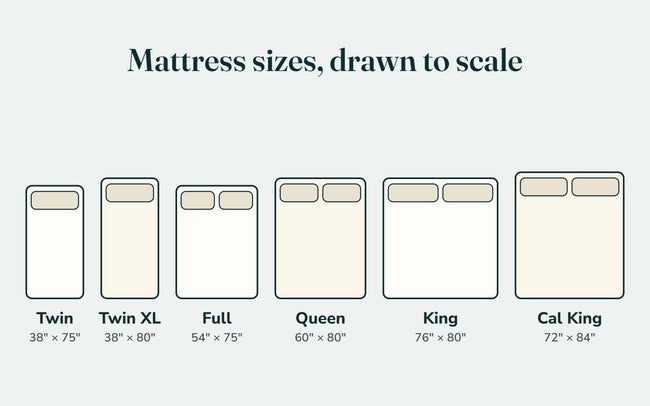
Here are typical headboard widths for each standard mattress size, with the mattress dimensions and the smallest room each bed fits comfortably. Headboard sizes aren't regulated, so treat these as ranges and check the exact width of the headboard and frame you're buying.
| Bed size | Mattress (W x L) | Typical headboard width | Headboard width (cm) | Minimum room size |
|---|---|---|---|---|
| Twin | 38 x 75 in (97 x 191 cm) | 39-43 in | 99-109 cm | 7 x 10 ft (2.1 x 3 m) |
| Twin XL | 38 x 80 in (97 x 203 cm) | 39-43 in | 99-109 cm | 7 x 10 ft (2.1 x 3 m) |
| Full | 54 x 75 in (137 x 191 cm) | 55-59 in | 140-150 cm | 9 x 10 ft (2.7 x 3 m) |
| Queen | 60 x 80 in (152 x 203 cm) | 61-66 in | 155-168 cm | 10 x 10 ft (3 x 3 m) |
| King | 76 x 80 in (193 x 203 cm) | 77-82 in | 196-208 cm | 12 x 12 ft (3.7 x 3.7 m) |
| California King | 72 x 84 in (183 x 213 cm) | 73-78 in | 185-198 cm | 12 x 12 ft (3.7 x 3.7 m) |
Need the full set of bed measurements? Our mattress size chart and bed frame size chart cover every standard size.
Headboard Width
A headboard is sized to match the bed frame, and most frames are about 2 to 5 inches wider than the mattress they hold. That's why a queen headboard is usually around 62 inches wide even though a queen mattress is 60 inches. A headboard that's a little wider than the mattress frames the bed neatly; one that's narrower looks undersized.
If the headboard bolts to the frame, the width has to line up with the frame's mounting holes or brackets, so buy the headboard made for your exact bed size. Wall-mounted and freestanding headboards are more forgiving: you can go wider for a dramatic look, as long as there's room for nightstands on both sides.
Tip
Measure the bed frame from outside edge to outside edge, not the mattress. Then plan the wall: add the width of your nightstands plus a few inches of breathing room on each side, and check for windows, outlets and light switches the headboard might cover.

About 41"
Twin Headboard Dimensions
Width: about 39-43 inches (99-109 cm), often 41 inches (104 cm). Room: 7 x 10 feet.
Twin and twin XL mattresses are both 38 inches wide, so they use the same headboard. Twin headboards are often a bit shorter to keep a small room feeling open.
About 56"
Full Size Headboard Dimensions
Width: about 55-59 inches (140-150 cm), often 56-57 inches (142-145 cm). Room: 9 x 10 feet.
A full headboard is just wide enough to frame a 54-inch full mattress without overpowering a smaller bedroom.
About 62"
Queen Size Headboard Dimensions
Width: about 61-66 inches (155-168 cm), often 62-64 inches (157-163 cm). Room: 10 x 10 feet.
Made for a 60-inch queen mattress. Some people put a queen headboard behind a full bed; the extra 6 inches is barely noticeable once the bedding is on, but a frame-mounted one may not line up with a full frame's bolt holes.
About 80"
King Size Headboard Dimensions
Width: about 77-82 inches (196-208 cm), often 78-80 inches (198-203 cm). Room: 12 x 12 feet.
A king headboard is the widest standard size, made for a 76-inch king mattress. It also fits a split king (two twin XL halves). Plan for at least 12 x 12 feet so you still have room for nightstands.
About 74"
California King Size Headboard Dimensions
Width: about 73-78 inches (185-198 cm), often 74-76 inches (188-193 cm). Room: 12 x 12 feet.
A California king is 4 inches narrower than a king, so its headboard is narrower too. King and Cal king headboards aren't interchangeable; see our king vs California king guide for the difference.
Wider
Extra-Wide and Wall-to-Wall Headboards
Want a bigger statement? Wall-mounted headboards and paneling can run well past the frame, sometimes behind the nightstands or across the whole wall. Since they don't bolt to the bed, their width only has to suit your wall.
Headboard Height
There's no fixed standard for headboard height, and it varies a lot by style. Two numbers matter: the overall height of the headboard from the floor, and how much of it shows above your mattress. The second one is what you actually see and lean against.
10-20"Short: shows above the mattress (25-51 cm)
20-30"Medium: good for sitting up to read (51-76 cm)
30"+Tall: statement look, best with high ceilings (76 cm+)
36-60"Common overall height from the floor (91-152 cm)
As a rule of thumb, smaller beds tend to have shorter headboards and larger beds taller ones, but plenty of twin headboards are tall and plenty of king headboards are low. Pick the height that suits your room and how you use your bed rather than a number tied to the bed size.
How Much of the Headboard Will Show?
Measure from the floor to the top of your mattress (with any topper on it), then subtract that from the headboard's overall height. For example, a 14-inch bed frame, a 10-inch mattress and a 3-inch topper put the sleeping surface at about 27 inches, so a 54-inch headboard shows about 27 inches above it.
Tall mattresses and toppers
Many mattresses are 10 to 14 inches thick, and a mattress topper adds another 2 to 4 inches. Every inch you add to the bed is an inch less headboard showing, so a short headboard can almost disappear behind a tall mattress and pillows. If you're adding a topper or upgrading to a thicker mattress, choose a taller or height-adjustable headboard. Our guide to how high a bed should be helps you work out the total.
Short Headboards
Short or low-profile headboards show roughly 10 to 20 inches above the mattress. You'll often see them on twin, twin XL and full beds in kids' rooms and guest rooms, under windows, and in rooms with low or sloped ceilings. They take up little wall space, so the room feels more open, but they won't do much as a backrest.
Tall Headboards
Tall headboards rise 30 inches or more above the mattress, and statement designs can reach 60 to 70 inches or more overall. They're usually paired with queen, king and California king beds, and they're great if you like to sit up in bed. They look best with ceilings of about 9 feet or higher; in a room with 8-foot ceilings, a very tall headboard can feel crowded. Tall, heavy headboards are steadiest when they're anchored to the wall as well as the frame.
Adjustable Headboards
Not sure how tall you want it? Many frame-mounted headboards have slotted legs or several rows of mounting holes, so you can raise or lower them a few inches. That's handy if you later switch to a thicker mattress or add a topper. Wall-mounted headboards can be hung at any height you like.
Types of Headboards by How They Attach
How a headboard attaches affects which width you need and how tall it can sit. There are three main options.
Frame-mounted
Bolts to the head of the bed frame or to headboard brackets. It's the most common type and moves with the bed.
- Must match your frame's width and bolt spacing
- Height set by the legs or mounting holes
- Can leave a small gap behind the mattress
Wall-mounted
Hangs on the wall, often on a cleat, and the bed pushes up against it. It doesn't need to connect to the frame at all.
- Works with platform beds and frames without brackets
- Hang it at any height
- Can be wider than the bed
Freestanding
Stands on its own legs between the bed and the wall. No tools or drilling, so it's popular with renters.
- Easy to move or swap
- Choose one about your frame's width
- Can shift unless it's wedged in or anchored
Some beds have an integrated headboard that's built into the frame, such as many upholstered and sleigh beds. In that case the headboard size is set by the bed, and you don't need to buy one separately.
Turmerry bed frames
Our Wooden Bed Frame is a low-profile, 13-inch-tall platform frame with solid pine slats, and the Platform Base is a foldable base with stackable legs. Neither one comes with a headboard, and neither lists headboard brackets, so a wall-mounted or freestanding headboard is the simplest way to add one. The Wooden Bed Frame is about 41 inches wide in twin and twin XL, 57 in full, 63 in queen, 79 in king and 75 in California king, so a headboard in the matching size range above will frame it neatly.
Types of Headboards by Material
Once you know the size and how it attaches, the material sets the look, the feel and how much care it needs.

Wooden Headboards
Wood is a classic, versatile choice for both traditional and modern rooms. It comes in natural finishes such as pine, oak and maple, or painted to match your accent colors. Wood headboards are often paired with platform beds, sleigh beds and four-poster beds, and they suit styles from modern to rustic.

Metal Headboards
Metal headboards in wrought iron, brass or steel have a sleek or industrial look and are often more budget-friendly than solid wood or upholstered designs. Their open, slim profile works well in smaller rooms and minimalist decor. They're common on platform beds, bunk beds and four-poster beds.

Upholstered Headboards
Upholstered headboards are covered in fabric, leather, velvet or suede over padding, so they're the softest to lean against and a little thicker than other types. Styles include straight panels, wood-framed designs and tufted headboards with buttons or nailhead trim. They can be frame-mounted, wall-mounted or freestanding. Fabric needs regular vacuuming and spot cleaning.

Storage Headboards
Storage headboards have built-in shelves, cubbies or drawers for books, lamps and decor, and they're often part of a bookcase bed or platform frame. They're deeper than other headboards, so they push the bed several inches further from the wall. Measure the room length before you choose one.

How to Measure for a Headboard
A few minutes with a tape measure saves you from returning a headboard that's too narrow, too short or too big for the wall.
-
Measure the bed frame width
Measure the frame from outside edge to outside edge at the head of the bed. Don't go by the mattress, which is usually narrower than the frame.
-
Measure to the top of the mattress
Measure from the floor to the top of the mattress, including any topper. This is the part of the headboard that will be hidden.
-
Decide how much should show
Add the amount you want visible: about 10 to 20 inches for a low look, 20 to 30 inches if you sit up to read. That total is the overall headboard height to shop for.
-
Check how it will attach
Look for bolt holes or headboard brackets at the head of your frame and measure the distance between them. If there aren't any, plan on a wall-mounted or freestanding headboard.
-
Measure the wall
Note the wall width, ceiling height and the position of windows, outlets, switches and vents. Leave room for nightstands and lamps on each side.
How to Choose the Right Headboard for Your Bedroom
With your measurements in hand, use this checklist to narrow down your options.
- Match it to your bed: Choose the headboard made for your bed size (twin, full, queen, king or California king), using the width chart above.
- Consider your space: Check the ceiling height and wall space, and remember nightstands, dressers and doors need room too.
- Reflect your style: Classic, modern, cozy or bold, your headboard sets the tone for the room, so pick a shape and finish that fits.
- Choose the right material: Wood, metal and upholstery each have their own look and care needs. Pick one that suits your room and how much cleaning you want to do.
- Check the height: Make sure enough of the headboard shows above your mattress and topper, and that it's in proportion with the room.
- Think about storage: If you need more space for books and essentials, a storage headboard can help, as long as the room has the depth for it.
- Set a budget: Decide what you want to spend before you shop, and include any brackets or wall hardware you'll need.
- Read reviews and ask around: Reviews and friends who've bought headboards recently can tell you how a model holds up and how easy it is to install.
Still choosing a frame to go with it? Our guide to bed frame types walks through platform, slatted, adjustable and other styles.
Conclusion
Headboards are more than decoration: they give you a comfortable backrest, protect the wall and pull the bedroom's look together. Start with your bed frame's width, check how much height will show above your mattress and topper, then pick the attachment type and material that suit your frame and your room. With those three things settled, you'll find a headboard that fits the first time.

Frequently Asked Questions

SHOPPING FOR A NEW MATTRESS?
Choose 7, 10 or 12 inches and swap layers to change the feel. 120-night trial, free pillows with every mattress.
$719.20 $899.00From. Code BF20 is added at checkout.
Early Access Black Friday Sale: 20% off7 Zone Organic Latex Mattress
$719.20 $899.00From, with BF20
Get exclusive offers by email
Sale alerts and new sleep guides. Unsubscribe anytime.
Shop what's in this guide
 7 Zone Organic Latex Mattress$719.20
 7 Zone Organic Latex Mattress Topper$84.15
 Organic Waterproof Mattress Protector$50.15
 Organic Latex Pillow$83.30
Starting prices. Sale codes BF20 and BF15 are added at checkout.

Disclaimer: What is said in this article has been referenced from multiple sources and is intended only for educational and informational purposes. Please note that no content in this article is a substitute for professional advice from a qualified doctor or healthcare provider. Always consult an experienced doctor with any concerns you may have regarding a health condition or treatment, and never disregard any medical suggestions or delay in seeking treatment because of something you read here.
