No Products in the Cart
Is Memory Foam Toxic? What You Need to Know
Written by Zulekha Nishad

Last Updated November 21, 2026
"Is memory foam toxic?" is one of the most common questions people ask before buying a memory foam mattress, topper or pillow, and it's a fair one. You spend about a third of your life in bed, and a new foam mattress often arrives with a noticeable smell. This guide walks through what memory foam is made of, what that "new foam" smell actually is, what third-party certifications check, and simple steps you can take, so you can make a calm, informed choice.
Quick answer
Memory foam is a polyurethane foam widely used in mattresses, toppers and pillows, and mattresses sold in the U.S. must meet federal flammability standards. The "new foam" smell comes from volatile organic compounds (VOCs) released when the foam is new; it usually fades within a few days to a few weeks with good airflow. To learn what's in a specific product, look for independent certifications (CertiPUR-US, for example, requires low VOC emissions of less than 0.5 parts per million) and ask the maker. If you have health concerns, talk to your doctor.
Key Takeaways:
- Memory foam is viscoelastic polyurethane foam, made mainly from petroleum-based ingredients (some versions swap part of them for plant oils).
- The smell of a new memory foam product comes from VOCs released as the foam airs out, often called off-gassing. It's strongest right after unpacking and fades over days to weeks.
- Certification programs such as CertiPUR-US, OEKO-TEX Standard 100, GREENGUARD Gold and eco-INSTITUT each test for different things, so check which part of a product is certified and to which standard.
- Practical steps help: unpack the product in a well-ventilated room, give it time to air out, and ask the maker what's inside and how it meets flammability rules.
- If you have asthma, chemical sensitivities or any other health concern, talk to your doctor before you buy.
The Composition of Memory Foam
Knowing what's inside a mattress is the best place to start. Here's what memory foam is made of and why each ingredient is there.
Mostly Polyurethane Foam
Memory foam is a type of polyurethane, the same family of foam used in sofas, car seats and many other cushions. Makers adjust the recipe to make it viscoelastic: it softens with your body heat and pressure, slowly molds to your shape, then slowly returns to its original shape when you get up. That slow, sink-in response is what makes memory foam so popular.
Some memory foams are infused with gel, copper or charcoal, which are mainly marketed for cooling or freshness. "Plant-based" memory foams replace part of the petroleum-based ingredients with plant oils, such as soy, but they are still polyurethane foam.
What Goes Into Memory Foam
Like most manufactured materials, memory foam is made from several ingredients that react together. Formulas vary from brand to brand, but these are the main building blocks:
| Ingredient | What it does | What to know |
|---|---|---|
| Polyols | The main base of the foam | Usually petroleum-based; some foams replace part of them with plant oils |
| Isocyanates (diisocyanates) | React with the polyols to form the polyurethane | They react with the polyols as the foam forms; workplace safety rules govern how factories handle them |
| Blowing agents, catalysts and additives | Create the bubbles, control the reaction and fine-tune the feel | The exact mix is set by each manufacturer, so ask if you want details |
| Adhesives | Bond foam layers together in some mattresses | Not every mattress uses them; ask the maker what bonds the layers |
You'll often see concerns online about formaldehyde. CertiPUR-US, the best-known certification for polyurethane foam, requires certified foam to be made without formaldehyde, so a certification is a simple way to check this for the foam itself.
How Mattresses Meet Fire Safety Rules
Every mattress sold in the U.S. has to pass federal flammability standards set by the Consumer Product Safety Commission. Makers meet them in different ways: some use flame-retardant chemicals, while others use a fire barrier such as wool or a special fabric sock around the foam. Some older flame retardants, such as PBDEs, have been phased out over the years.
Tip
If you want to know how a mattress meets fire safety rules, just ask the brand. A clear, specific answer ("a wool layer," "a fabric fire sock," or the chemical used) is a good sign. Turmerry's latex mattresses use natural New Zealand wool as the fire barrier, with no added chemical flame retardants.
What Is the "New Foam" Smell?
The smell you notice when you open a new memory foam mattress or topper comes from volatile organic compounds (VOCs). VOCs are a broad group of carbon-based chemicals that evaporate into the air at room temperature. They're released by lots of everyday products, from paint and cleaning supplies to new furniture and carpet.
When a foam product is new, especially one that was compressed and sealed in plastic for shipping, it releases these compounds into the room as it airs out. This is often called off-gassing. Everyone notices it differently: some people barely smell it, while others find it strong for the first day or two.
Day 1The smell is usually strongest right after unpacking
Days–weeksIt typically fades within a few days to a few weeks
AirflowOpen windows and a fan help it fade faster
<0.5 ppmCertiPUR-US limit for VOC emissions from certified foam
How long the smell lasts depends on the foam formula, how long the product was sealed in its packaging, the size of the room, the temperature and how much fresh air moves through. A smell that fades is normal for many new products. If a smell doesn't fade after several weeks, contact the maker.
What Certifications Cover
You can't tell much about a foam's chemistry by looking at it or smelling it. Independent certifications are the most practical way to check, because the product has to be tested against a published standard. Each program checks different things, though, so it helps to know what each one covers:
CertiPUR-US
A program for flexible polyurethane foam, including memory foam. Certified foam is made without formaldehyde, ozone depleters, mercury, lead and other heavy metals, and phthalates regulated by the CPSC. It must have low VOC emissions (less than 0.5 parts per million) and is screened for certain chemicals, including flame retardants. It certifies the foam, not the whole mattress.
OEKO-TEX Standard 100
Tests textiles and their components, such as fabric, thread and zippers, for a long list of regulated substances. Limits are strictest for items that touch the skin, such as baby products.
GREENGUARD Gold
A UL certification for products with low chemical emissions into indoor air. Products are tested in a chamber that measures what they release over time.
eco-INSTITUT
A German label for indoor products, including mattresses. It tests emissions of VOCs and other substances in test chambers and restricts a wide range of substances.
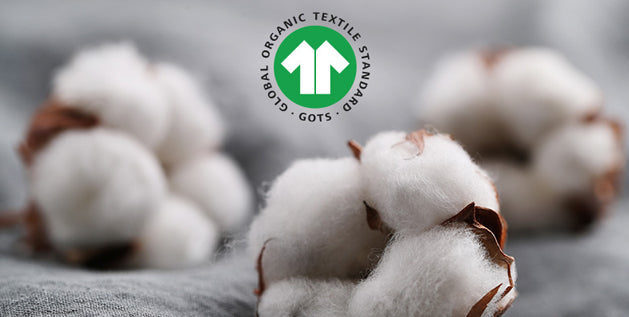
Organic certifications answer a different question. GOLS (Global Organic Latex Standard) and GOTS (Global Organic Textile Standard) cover organic content, limits on processing inputs and traceability from farm to finished product. They apply to latex and textiles, not to polyurethane foam.
Good to know
A certification shows a product met that standard's limits when it was tested. When you shop, check which part is certified (the foam, the cover fabric or the whole mattress) and look for a certificate number you can verify with the certifier.
How to Reduce New-Foam Smell at Home
Whatever mattress you choose, these simple steps help a new product air out and help you shop with confidence:
-
Check certifications before you buy
Look for the certifications above on the product page, and make sure they cover the part you care about. Ask for certificate numbers if they aren't listed.
-
Ask the maker what's inside
A good brand will tell you what each layer is made of, what bonds the layers and how the mattress meets fire safety rules.
-
Unpack it in a well-ventilated room
Open the packaging in the bedroom or another room where you can open a window. Remove all plastic wrap right away.
-
Give it time to air out
Let the mattress or topper expand and air out before you make the bed, ideally for a day or more. Many people unpack it in the morning so it has all day to breathe.
-
Keep the air moving
Open windows, run a fan or use your HVAC system's fresh-air setting for the first few days. Good ventilation is a smart habit for any room with new furniture, paint or flooring.
-
Follow up if the smell lingers
If a strong smell doesn't fade after several weeks, contact the maker and ask about returns or exchanges.
When to Talk to a Doctor
Most people simply notice a smell that fades. But if you or someone in your home has asthma, allergies, chemical sensitivities or another health condition, talk to your doctor before buying a new mattress, and ask what to look for. If you notice anything that concerns you after bringing home any new product, open the windows, step out of the room and check with your doctor.
Babies and infants
For babies, follow the American Academy of Pediatrics safe-sleep guidance: a firm, flat crib mattress made for that crib, covered only with a fitted sheet, and no pillows, toppers, blankets or soft items in the sleep space for the first 12 months. Ask your pediatrician if you have questions about a crib mattress.

The Environmental Impact of Memory Foam
Many people asking about memory foam are also thinking about the planet. Here is a fair look at the environmental side.
Production and Raw Materials
Most memory foam is made from petrochemicals, which come from non-renewable fossil fuels. Turning them into foam takes energy, as making any foam does. Plant-based memory foams replace part of the petroleum-based ingredients with plant oils, and some manufacturers publish their own environmental programs, so it's worth asking a brand what it does.
Durability and Disposal
How long a mattress lasts and what happens to it afterwards both matter for its footprint:
- Lifespan: memory foam can soften and develop body impressions over time. Higher-density foam generally lasts longer than lower-density foam.
- Recycling: polyurethane foam isn't easy to recycle at home, but mattress recyclers can recover foam (often for carpet padding), steel and fabric. Some states, including California, Connecticut and Rhode Island, run statewide mattress recycling programs.
- Breakdown: polyurethane foam isn't readily biodegradable, so foam that goes to a landfill stays there for a very long time.
Buying a mattress that suits you and lasts, and recycling it at the end of its life, are the two biggest things you can do to reduce waste, whatever the material.
Certified Memory Foam
If you love the feel of memory foam, choosing certified foam is a straightforward way to know it was tested against a published standard. CertiPUR-US covers the foam's content and emissions, and textile or emissions labels such as OEKO-TEX, GREENGUARD Gold or eco-INSTITUT can cover other parts of the product. Certified foam is still a petroleum-based material, so if sustainability is a priority, weigh that too.
Natural and Organic Materials
If you'd rather sleep on materials from renewable sources, natural latex, organic cotton and wool are the main options. Natural latex comes from the sap of rubber trees, which are tapped for decades without being cut down. Organic certifications such as GOLS for latex and GOTS for cotton also track materials from farm to finished product, so you can verify the claims.
Natural materials have trade-offs of their own: latex costs more and is heavier than memory foam, and it isn't a fit for anyone with a latex allergy.
Comparing Memory Foam to Other Mattress Materials
Every mattress material has strengths. Here's how memory foam compares with the other common choices on materials, smell, feel and what to check before you buy.
| Material | Made from | Smell when new | Feel | What to check |
|---|---|---|---|---|
| Memory foam | Viscoelastic polyurethane foam | Often a "new foam" smell that fades with airing | Slow, deep, hugging sink | Foam certification, density, fire barrier |
| Natural latex | Foam made from rubber tree sap | Little or none; a faint natural scent at most | Buoyant and responsive | Natural latex percentage, GOLS certificate, latex allergy |
| Innerspring | Steel coils with foam or fiber padding on top | Depends on the padding | Bouncy, with less contouring | What the comfort layers are made of |
| Hybrid | Pocket coils with a foam or latex comfort layer | Depends on the comfort layer | Supportive with some bounce | Comfort layer material and its certifications |
Organic Latex
Organic latex is a popular alternative for people who want a plant-based material. It's made from rubber tree sap, whipped into foam and baked. Many sleepers like its responsive, pressure-relieving feel: you rest on top of it rather than sinking in, and it's easy to change positions.
- Renewable source: rubber trees are tapped for their sap for about 25 to 30 years.
- Verifiable: GOLS-certified latex must contain at least 95% certified organic raw latex, with limits on additives during processing.
- Breathable and durable: latex's open-cell structure and pinholes let air move, and it's slow to form body impressions.
- Trade-offs: latex costs more, weighs more, and isn't suitable if you have a latex allergy (see our guide to latex allergy and latex mattresses).
The organic Dunlop latex in Turmerry's 7 Zone Organic Latex Mattress and latex toppers is GOLS certified (Control Union, certificate CU 886641). We also had our latex foam tested by Applied Technical Services (ATS), an ISO/IEC 17025-accredited U.S. laboratory:
<16 ppmFormaldehyde: below 16 parts per million
<100 ppmTotal fluorine, a widely recognized threshold for no detectable PFAS
0 of 10Phthalates: non-detectable levels of all 10 major phthalates in GC/MS testing
GOLSCertified organic Dunlop latex (CU 886641)
You can read the details and download both test reports on our product certifications page. For a side-by-side look at feel, heat and durability, see latex vs. memory foam mattresses.
Innerspring Mattresses
Traditional innerspring mattresses support you with a layer of steel coils, usually topped with foam or fiber padding for comfort. What's in the padding varies, so the same questions about foam and certifications apply to the comfort layers. Innerspring beds tend to feel bouncier, with less contouring than memory foam or latex. Our guide to innerspring vs. memory foam vs. hybrid mattresses compares them in more detail.
Hybrid Mattresses
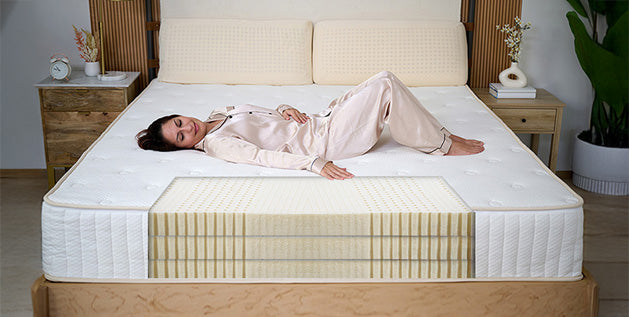
Hybrid mattresses combine a pocket coil support core with a comfort layer of foam or latex on top. The comfort layer is the part you'll smell and feel, so check what it's made of. For example, the Turmerry DIY Hybrid Mattress is built from:
- A choice of comfort: GOLS-certified organic Dunlop latex in Soft, Medium, Firm or Extra Firm, with pinholes for airflow.
- 8-inch QuadCoil® pocket springs: made with 98% recycled steel in a glue-free coil construction, with firmer coils along the sides in most sizes.
- Natural New Zealand wool: the mattress's fire barrier, with no added chemical flame retardants.
- A zippered organic cotton cover: unzip it to see every layer, and swap or replace layers over time.
Mattress Toppers for Added Comfort
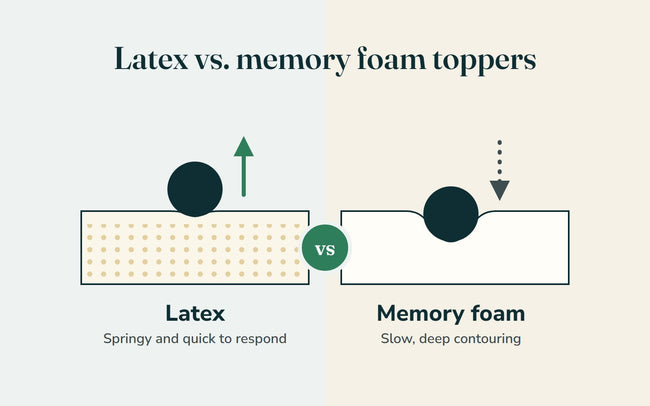
If your mattress is still supportive but you'd like to change how it feels, a topper is an easy upgrade. Memory foam toppers add a soft, cradling layer, while latex mattress toppers add cushioning with more bounce. Our latex vs. memory foam topper guide compares the two in detail.
- Breathable: pinhole latex lets air move through the layer, which many hot sleepers prefer.
- Pressure relief and support: the 7 Zone Latex Mattress Topper has firmer zones at the head and feet, medium-firm zones under the back and hips, and softer zones at the shoulders and thighs.
- Certified: made with GOLS-certified organic Dunlop latex.
- Your choice of feel: 2, 3 or 4 inches thick, from Soft to Extra Firm.
- Long-lasting: latex is resilient and slow to form body impressions with proper care.
- Try it at home: a 365-night trial, so you can sleep on it before you decide.

Final Thoughts
"Is memory foam toxic?" is a question worth asking, and the most useful answer is to look at the specific product. Memory foam is a polyurethane foam, a new one often has a smell from VOCs that fades with airing, and certifications tell you what a product was tested for. Check which parts are certified, ask the maker what's inside, air a new mattress out well, and talk to your doctor if you have health concerns.
If you'd prefer a plant-based material you can verify, organic latex is a good option to compare. Whatever you choose, pick the bed that feels right for your body and gives you peace of mind. Questions about what's inside a Turmerry product? Call us at 984-299-6850 and we'll tell you exactly what each layer is made of.
Frequently Asked Questions

SHOPPING FOR A NEW MATTRESS?
Choose 7, 10 or 12 inches and swap layers to change the feel. 365-night trial, free pillows with every mattress.
$719.20 $899.00From. Code BF20 is added at checkout.
Get exclusive offers by email
Sale alerts and new sleep guides. Unsubscribe anytime.
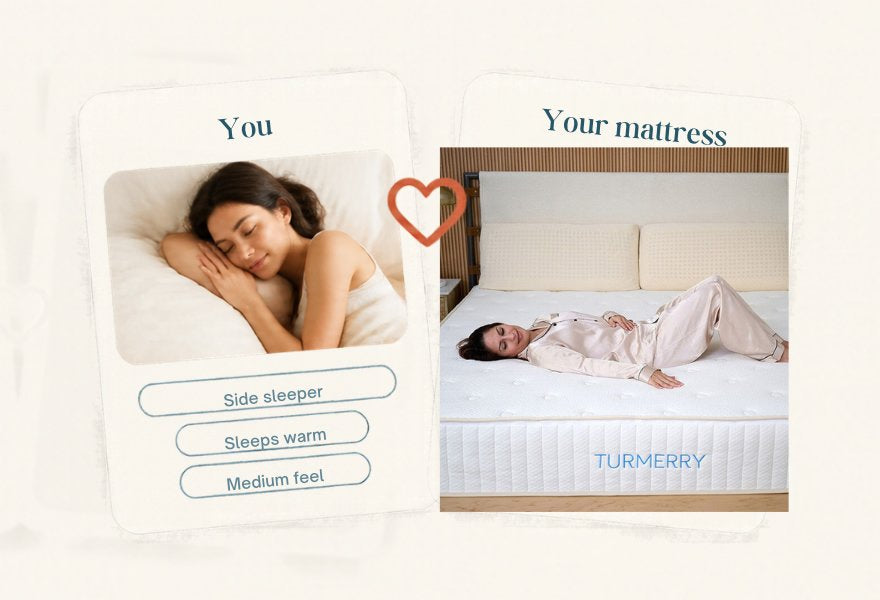
Shop what's in this guide
 7 Zone Organic Latex Mattress$719.20
 7 Zone Latex Mattress Topper$84.15
 Organic Waterproof Mattress Protector$50.15
 Organic Latex Pillow$83.30
Starting prices. Sale codes BF20 and BF15 are added at checkout.

Disclaimer: What is said in this article has been referenced from multiple sources and is intended only for educational and informational purposes. Please note that no content in this article is a substitute for professional advice from a qualified doctor or healthcare provider. Always consult an experienced doctor with any concerns you may have regarding a health condition or treatment, and never disregard any medical suggestions or delay in seeking treatment because of something you read here.
