No Products in the Cart
Latex vs. Memory Foam Mattress Topper
Written by Mohammed Aftab

Last Updated November 5, 2026
Latex or memory foam? It's the most common question people ask when they shop for a mattress topper, and both are good answers for the right sleeper. Latex toppers feel buoyant and responsive, sleep cool and last a long time. Memory foam toppers feel soft and slow, with a deep "hug" that many people love, usually at a lower price. This guide compares the two side by side, with honest pros and cons for each, so you can pick the one that suits your body, your bed and your budget.
Quick answer
Choose latex if you want a responsive, buoyant topper that sleeps cooler, holds up well for heavier sleepers and usually lasts longer, and you don't mind paying more upfront. Choose memory foam if you love a slow, deep sink, want the least motion transfer from a partner, or need a lower price. Both can give good pressure relief, so the choice mostly comes down to feel, heat and how long you want the topper to last.
Key Takeaways:
- Latex toppers balance cushioning and support. They spring back instantly, so you rest "on" the topper and can change positions easily.
- Memory foam toppers contour closely and slowly, so you sink "in" for a hugging feel. They are the best of the two at absorbing a partner's movement.
- Latex usually sleeps cooler. Traditional memory foam holds more body heat, while gel-infused and open-cell versions are designed to run cooler.
- Latex costs more upfront and is heavier, but it usually lasts longer. Memory foam is easier on the budget but is often replaced sooner.
- Neither material can fix a sagging mattress. A topper changes the feel of your bed, not the support underneath.

Below you'll find a quick comparison table, a closer look at each material, a feature-by-feature comparison, and a short checklist to help you decide. If you've already chosen latex, our mattress topper thickness guide will help you pick 2, 3 or 4 inches.
Quick Comparison Table: Latex vs. Memory Foam
Here is how the two materials compare on the things that matter most day to day. "Better" depends on what you want, so read each line with your own preferences in mind.
| Feature | Latex topper | Memory foam topper |
|---|---|---|
| Material | Foam made from the sap of rubber trees (natural), or synthetic and blended versions | Viscoelastic polyurethane foam |
| Feel | Buoyant and springy; you rest on top of it | Soft and slow; you sink in and feel cradled |
| Response | Springs back instantly, so it's easy to change positions | Recovers slowly, so moving around takes a little more effort |
| Pressure relief | Good, with steady push-back that keeps you supported | Excellent close contouring around shoulders and hips |
| Heat | Breathable; pinhole designs let air move through the layer | Traditional foam holds more heat; gel and open-cell versions run cooler |
| Durability | Very resilient; often lasts well beyond 5 years with care | Commonly 3 to 5 years; higher-density foam lasts longer |
| Motion isolation | Good, with a little bounce | Excellent; absorbs most movement |
| Smell when new | Little or none; a faint natural scent at most | Often a "new foam" smell that fades after a few days of airing |
| Weight | Heavy; a Queen 3" latex topper weighs about 30 to 52 lbs | Usually lighter at the same thickness |
| Firmness range | Soft to extra firm | Mostly soft to medium |
| Care | Spot clean, use a cover, lift rather than drag | Spot clean, use a cover, let it fully expand after unboxing |
| Price | Higher upfront; organic latex costs the most | Lower upfront, with a wide range |
| Often best for | Hot sleepers, combination sleepers, heavier sleepers, anyone who wants a long-lasting topper | Side sleepers who love a hug, light sleepers bothered by a partner's movement, tighter budgets |
Latex Mattress Toppers
Latex mattress toppers come in three main types: natural latex, synthetic latex and blended latex. Synthetic latex is made from petroleum-based rubber, and blended latex mixes natural and synthetic rubber. Both usually cost less, while natural latex tends to be more resilient and longer lasting. To keep things simple, this article focuses on natural latex toppers.
Material Composition
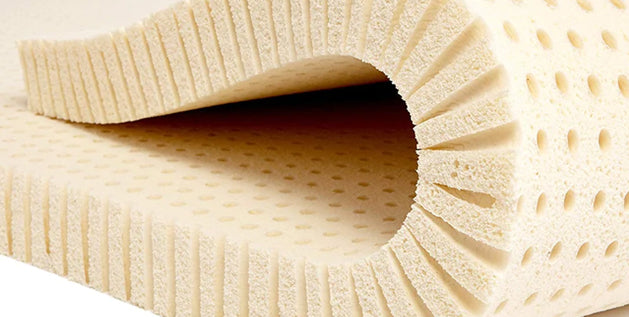
Natural latex mattress toppers are made of latex foam, and latex is the milky sap collected from rubber trees (Hevea brasiliensis). The sap is whipped into foam and baked (vulcanized), which sets its shape and gives it its natural elasticity and durability.
There are two ways to make latex foam: the Dunlop or Talalay method. Dunlop latex is typically denser, with a grounded, supportive feel. Talalay adds extra steps that give it a lighter, airier and very consistent feel. Both come in soft to firm options, so the choice is a matter of preference. Turmerry's 7 Zone topper uses GOLS certified organic Dunlop latex.

Best Known For
Natural latex mattress toppers are best known for their bounce, responsiveness, durability and balanced feel. Many sleepers find they give pressure relief without the sinking feeling, which makes latex a popular mattress topper for people who want a bed that feels both softer and supportive. Natural latex is also a renewable, plant-based material.
Best Compatibility
Latex toppers work on all common types of mattresses, including innerspring, memory foam, hybrid and latex. They're useful for softening a mattress that feels too firm, refreshing an older mattress that is still supportive, or firming up a bed that feels a little too soft (as long as it doesn't sag). Because they come in soft to extra firm, latex toppers suit every sleep position. Firmer latex is a common pick for back and stomach sleepers, and softer latex for side sleepers.
Pros and Cons of Latex Mattress Toppers
Pros
- Responsive and buoyant: springs back instantly, so turning over is easy.
- Support with comfort: cushions pressure points while pushing back, so you don't sink too far.
- Breathable: latex's open structure, plus pinholes in many toppers, lets air move.
- Durable: resilient and slow to form body impressions.
- Wide firmness range: soft to extra firm, including options for heavier sleepers.
- Natural material: made from rubber tree sap, with certified organic options.
Cons
- Cost: natural latex costs more than memory foam, synthetic or blended toppers.
- Weight: latex is dense, so it's heavier than other types of toppers and harder to move.
- Feel: some people want more of a sink-in hug than latex gives, even in Soft.
- Bounce: it absorbs movement well, but a little more motion carries through than with memory foam.
- Latex allergy: not a fit if you're allergic to latex.

Good to know
If you have a known latex allergy, talk to your doctor before choosing a latex topper, or choose a latex-free material such as memory foam instead.
Memory Foam Mattress Toppers
Memory foam toppers also come in several types today:
- Traditional memory foam: the original slow-response foam.
- Gel memory foam: foam infused with gel, designed to feel cooler.
- Copper- or charcoal-infused memory foam: foam with added particles, usually marketed for cooling or freshness.
- Plant-based memory foam: foam where part of the petroleum-based ingredients is replaced with plant oils.
To keep things simple, this article focuses on traditional memory foam toppers, and notes where the newer types differ.
Material Composition
Traditional memory foam is made from polyurethane foam that responds to both heat and pressure. It softens where your body warms it and presses into it, so it molds closely to your shape. When you get up, it slowly returns to its original shape, which is why it's called "viscoelastic" polyurethane foam. It also means memory foam can feel firmer in a cool room and softer in a warm one.

Best Known For
Memory foam mattress toppers are best known for contouring closely to the body and giving deep pressure relief. The slow sink creates a cradling, hugging feel that many side sleepers love. Memory foam also absorbs movement very well, so it's a good choice for couples when one partner is easily woken by the other.
Best Compatibility
Memory foam toppers work on most mattress types, including innerspring, hybrid and latex mattresses. They suit people who want to add a soft, plush layer to a firm mattress. Memory foam works especially well for side sleepers, because it cushions the shoulders and hips. Heavier sleepers may sink through a soft memory foam topper and feel the mattress underneath, so they usually do better with a high-density or thicker option.
Pros and Cons of Memory Foam Mattress Toppers
Pros
- Deep pressure relief: molds closely around shoulders and hips.
- Personalized cushioning: the foam adapts to your shape, hence the name "memory" foam.
- Excellent motion isolation: absorbs a partner's movement better than most materials.
- Lower upfront cost: generally less expensive than latex.
- Lighter: usually easier to lift than latex of the same thickness.
- Widely available: many densities, thicknesses and cooling versions to choose from.
Cons
- Heat: traditional memory foam holds body heat, so it can feel warm.
- Slow response: the sink-in feel can make changing positions harder.
- New smell: many new memory foam toppers have a "new foam" smell that takes a few days of airing to fade.
- Temperature-sensitive feel: it can feel firmer in a cold room.
- Shorter lifespan: it can develop body impressions over time, especially lower-density foam.

Latex vs. Memory Foam Mattress Toppers - Which Is Better?
Now that you know what each material offers, here's how they compare feature by feature. Each section covers latex first, then memory foam.
Comfort and Cushioning
Latex: Latex toppers have a balanced feel, with comfort and support in equal measure. They cushion and contour to your body without making you feel stuck, which suits people who want a more buoyant sleeping surface.
Memory foam: Memory foam toppers excel at contouring to your body's shape, with a hugging effect and deep pressure relief. That sink-in feel is exactly what some people love, and what others find too enveloping.

Support and Responsiveness
Latex: Latex pushes back as it compresses and springs back instantly, so it's easy to move and change positions. That makes it a favorite of combination sleepers and heavier sleepers, and of anyone who wants their hips held up rather than sinking.
Memory foam: Memory foam gives good support for many light and average-weight sleepers. Its slow response means it takes a moment to adjust when you move, which some people find cozy and others find harder to move on. Heavier sleepers should look for higher-density foam.

Temperature Regulation
Latex: Latex is naturally breathable thanks to its open-cell structure, and many latex toppers, including Turmerry's, have pinholes through the layer so air can move. Because you rest on top rather than sinking in, less of your body is wrapped in foam.
Memory foam: Traditional memory foam tends to hold body heat, and the deeper you sink, the warmer it can feel. Gel-infused, copper-infused and open-cell memory foams are designed to reduce this, and they often cost more than traditional foam.

Durability and Resilience
Latex: Latex toppers are highly resilient and slow to form body impressions. With good care, they often last well beyond 5 years, which makes them a long-term purchase.
Memory foam: Memory foam toppers commonly last about 3 to 5 years. Lower-density foam can soften and develop impressions sooner, while higher-density foam holds up longer. Our guide to how long mattress toppers last covers the signs it's time to replace one.

Motion Isolation
Latex: Latex absorbs much of a partner's movement, but its bounce means a little more motion carries across the bed.
Memory foam: Memory foam absorbs movement where it happens, so it's hard to beat if your partner's tossing and turning wakes you up.
Allergies, Smell and Materials
Latex: Natural latex is a plant-based, renewable material. Turmerry's latex has little or no smell; most customers unpack their topper and use it right away, and some like to air it out for a few days first. If you have a latex allergy, choose another material or check with your doctor first.
Memory foam: Memory foam is made from synthetic, petroleum-based ingredients (plant-based versions replace some of them). A new memory foam topper often has a noticeable "new foam" smell when it's unpacked, which usually fades after a few days in a well-ventilated room. Many memory foam toppers carry CertiPUR-US certification, a program for flexible polyurethane foam.

Price and Value
Latex: Latex toppers cost more upfront, and certified organic latex costs the most. Because latex lasts longer, the cost per year of use often evens out, especially on a bed you plan to keep.
Memory foam: Memory foam toppers are generally more affordable, which makes them a good fit for a guest room, a dorm or a short-term fix. Over many years you may replace one more often, so it's worth weighing the price against how long you want the topper to last.

Tip
Not sure which you'll prefer? Press your hand into each material and lift it away. If you like that the foam holds your handprint, you'll probably enjoy memory foam. If you like that it pushes your hand straight back, try latex.
Using a Latex Topper on a Memory Foam Mattress (and Vice Versa)
You can mix materials. A latex topper on a memory foam mattress that feels too soft or slow gives the bed a more buoyant, easier-to-move-on surface; 2 to 3 inches in Medium or Firm is a good starting point. A memory foam topper on a firm latex or innerspring mattress adds a plush, cradling layer on top.
Whichever you choose, the mattress underneath still needs to be supportive. If it sags or has body impressions, a topper of either material will settle into the dips, and a new mattress is the better fix.
Choosing the Right Mattress Topper for You
Every sleeper is different, so the right topper is different too. Start with these two quick checklists, then read the factors below.
Choose latex if…
- You sleep warm or live in a warm climate
- You change positions a lot during the night
- You prefer to rest on top of the bed, not sink in
- You weigh more and want steady support
- You want a topper that lasts for years
- You'd like a natural, certified organic material
Choose memory foam if…
- You love a slow, deep, hugging sink
- Your partner's movement wakes you easily
- You're on a tight budget or need a short-term fix
- You want a lighter topper that's easy to move
- You tend to sleep cool
- You have a latex allergy

1. Current Mattress Condition
If your mattress is old and sags a lot, a topper won't fix it; you'll need a replacement first. If it's in decent shape and just needs a comfort boost, a topper is a great solution.
A firmer latex topper adds support to a soft mattress, and a soft latex topper adds cushioning to a firm one without taking away its support. A memory foam topper adds plushness to a firm mattress, but on a soft mattress it can make the surface feel even softer.

2. Body Weight and Sleeping Position
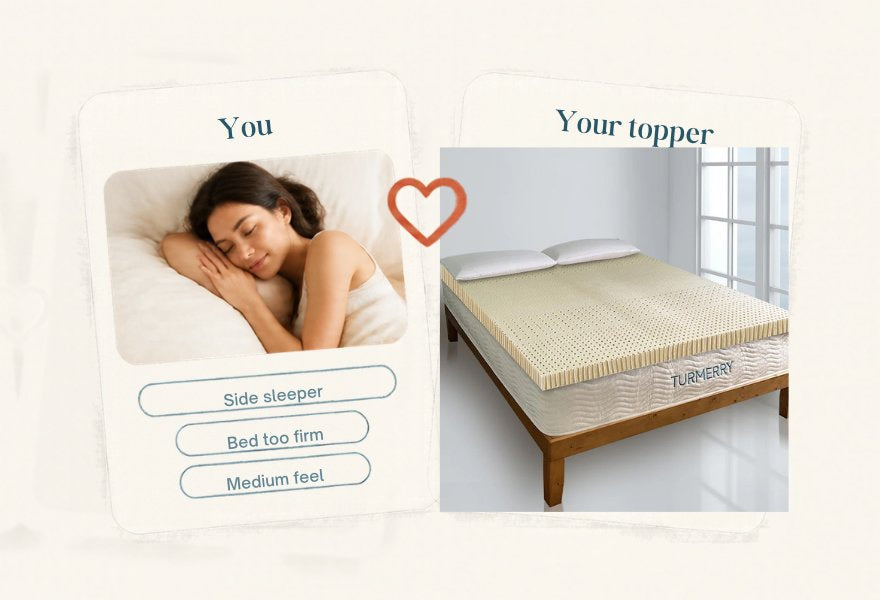
Lighter sleepers (under about 130 lbs) and side sleepers usually like a softer topper, such as memory foam or Soft latex, that cushions the shoulders and hips.
Average-weight sleepers (about 130 to 230 lbs) and back sleepers often prefer a slightly firmer surface, like a Medium latex topper.
Heavier sleepers (over about 230 lbs) and stomach sleepers usually do best on a firmer topper that keeps the hips from sinking, such as Firm or Extra Firm latex.

3. Climate and Temperature Preferences
If you sleep hot or live in a warm climate, latex is usually the better bet, because it lets more air move and you rest on top of it.
Traditional memory foam can hold heat, so if you prefer memory foam and sleep warm, look for a gel-infused or open-cell version.

4. Budget Considerations
Memory foam is the lower-cost option. Natural latex costs more, and certified organic latex the most. With either material, price rises with size and thickness, so a twin latex topper costs much less than a king latex topper.
Spending more on latex usually buys more years of use, but spending less doesn't take away the comfort that memory foam gives today.

5. Materials and Environmental Priorities
Natural latex comes from a renewable, plant-based source. Memory foam is made mostly from synthetic ingredients.
Look for certifications that match your priorities: GOLS for organic latex, OEKO-TEX or eco-INSTITUT for tested materials, and CertiPUR-US for polyurethane foam. If you are sensitive to smells, ask how long the brand suggests airing a new topper.
120 nights
6. Trial and Returns
Feel is personal, so buy a topper you can try at home. Turmerry's latex toppers come with a 120-night trial: sleep on yours for at least 30 nights, then exchange it for a different thickness or firmness, or return it. We accept one topper return or exchange per household every 12 months; see shipping and returns for details.
Get the Best Latex Mattress Toppers at Turmerry
If latex sounds like your match, Turmerry's 7 Zone Organic Latex Mattress Topper lets you choose the size, thickness and firmness that fit your body and bed.
2, 3, 4 inThickness options
4 levelsSoft, Medium, Firm and Extra Firm in 2 and 3 inches
GOLSCertified organic Dunlop latex (CU 886641)
120 nightsTrial, with free exchanges
- Seven comfort zones: firmer zones at the head and feet, medium-firm zones under the back and hips, and softer zones at the shoulders and thighs.
- A flippable 4 inch: a 2" Soft layer and a 2" Firm layer in an organic cotton cover. Sleep Soft side up for a plush feel, or flip it for a medium-firm feel.
- No seam down the middle, even in King and Cal King.
- No straps needed: latex is heavy and grips the mattress, so it stays put under a fitted sheet.
- Breathable pinhole design that lets air move through the latex.
The 2 and 3 inch toppers ship without a cover, so many people add our GOTS organic cotton Mattress Topper Cover to keep the latex clean. Prefer a textured feel? The Egg Crate Mattress Topper is a lower-profile latex option.
Good to know
Sleep Foundation named the Turmerry 7 Zone Organic Latex Mattress Topper Best Overall in its "Best Latex Mattress Toppers of 2026", with a 9.1/10 test score. Sleep Foundation may have an affiliate relationship with Turmerry.

Frequently Asked Questions

LOOKING FOR A TOPPER?
GOLS certified organic latex in 2, 3 or 4 inches, Soft to Extra Firm. Add an organic cotton cover and we install it before it ships.
$84.15 $99.00From. Code BF15 is added at checkout.
Early Access Black Friday Sale: 15% off7 Zone Latex Mattress Topper
$84.15 $99.00From, with BF15
Get exclusive offers by email
Sale alerts and new sleep guides. Unsubscribe anytime.
Shop what's in this guide
 7 Zone Organic Latex Mattress$719.20
 7 Zone Latex Mattress Topper$84.15
 Organic Waterproof Mattress Protector$50.15
 Organic Latex Pillow$83.30
Starting prices. Sale codes BF20 and BF15 are added at checkout.
Related blog posts:
1. Latex vs. Memory Foam Mattress

2. Synthetic Latex vs. Natural Latex
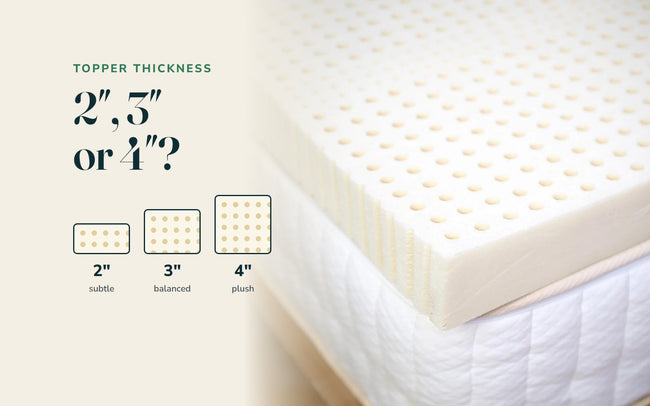
3. Mattress Topper Thickness – 2 Inch, 3 Inch, or 4 Inch?
Disclaimer: What is said in this article has been referenced from multiple sources and is intended only for educational and informational purposes. Please note that no content in this article is a substitute for professional advice from a qualified doctor or healthcare provider. Always consult an experienced doctor with any concerns you may have regarding a health condition or treatment, and never disregard any medical suggestions or delay in seeking treatment because of something you read here.
