No Products in the Cart
How to Choose a Mattress Topper
Written by Zulekha Nishad

Last Updated November 5, 2026
Knowing how to choose a mattress topper can turn a bed that's "almost right" into one you look forward to. With so many options, from memory foam and latex to down, wool and egg crate, it's easy to feel overwhelmed. Each material, thickness and firmness changes your bed in a different way, and the right mix depends on your body, how you sleep and the mattress you already have.
This guide walks you through the choice one decision at a time: whether a topper will help at all, what you want it to change, which material fits, how thick and how firm to go, and the practical details (size, sheets, covers, trial and warranty) that are easy to miss until the topper arrives.
Quick answer
First, check your mattress. A topper changes how a flat, supportive mattress feels, but it can't fix a sag. Then choose three things: material (latex for buoyant, breathable support; memory foam for a slow, hugging sink; down, feather, wool or fiber for a plush surface), thickness (2 inches fine-tunes, 3 inches changes the feel and is the best starting point for most people, 4 inches gives the most cushioning) and firmness (softer for side sleepers and lighter bodies, firmer for stomach sleepers and heavier bodies). Match the size to your mattress, make sure your fitted sheets are deep enough, and buy from a brand with a real trial.
Key Takeaways:
- A topper changes the feel of a mattress that's still flat and supportive. It can't fix sagging or a dip, because it settles into whatever is underneath.
- Decide what you want to change first (softer, firmer, more cushioning, less partner motion, a cooler-feeling surface), then choose the material that does that best.
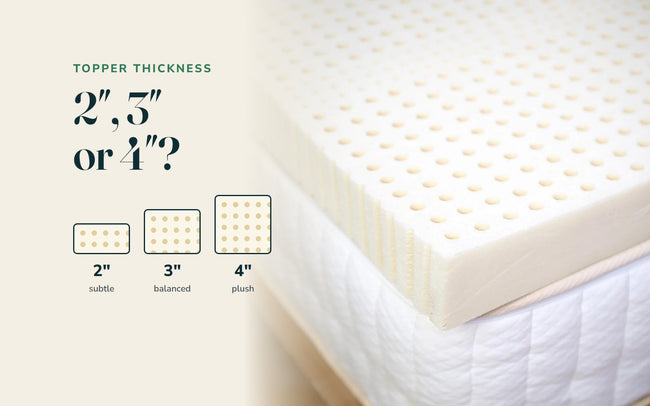
- Thickness sets how big the change is: 2 inches fine-tunes, 3 inches changes the feel, and 4 inches gives the deepest cushioning.
- Firmness depends on your sleep position and body weight: side sleepers and lighter bodies usually like softer, stomach sleepers and heavier bodies usually like firmer.
- Check the practical details before you buy: the same size as your mattress, sheets deep enough for both, a cover or protector from day one, and a fair trial, return policy and warranty.

Understanding Mattress Toppers: What Are They and Why Do You Need One?
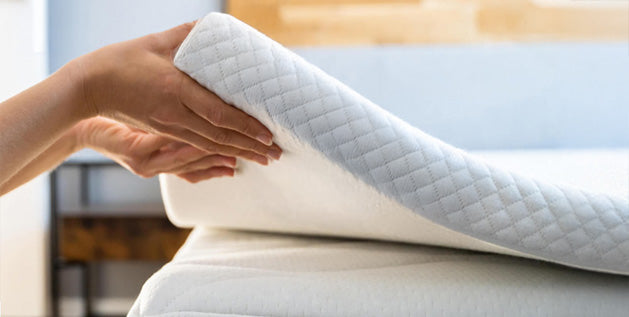
Mattress toppers are removable comfort layers, usually 1 to 4 inches thick, that lie on top of your existing mattress. They change the surface you sleep on: softer, firmer, more cushioned or more responsive. A thinner, quilted mattress pad mainly protects the mattress instead; our guide to the difference between mattress toppers and mattress pads explains when you need each.
Why Do You Need a Mattress Topper?
A topper is a simple way to change how your bed feels without buying a new mattress. Here are the most common reasons people buy one:
Comfort refresh
Even the best mattresses can feel different after a few years. If yours is still supportive, a topper adds back the cushioning on top.
A different firmness
A new mattress turned out firmer than you hoped, or your old one feels a little soft. A topper can make the surface softer or firmer without starting over.
Surface protection
A topper, ideally in a cover or under a protector, takes some of the nightly wear off the mattress surface.
A lower-cost upgrade
A good topper costs a fraction of a new mattress, and it's a quick fix for a guest bed, a dorm bed or an RV.
What a Topper Can't Do
A topper can't rebuild support that a mattress has lost. If the mattress sags, has a dip where you sleep, or has springs you can feel, the topper follows that shape and the bed still feels uneven. Our guide to mattress topper vs. new mattress helps you decide which you need.

How to Choose a Mattress Topper in 7 Steps
Work through these in order. Each step narrows the choice, and the sections below explain each one in more detail.
-
Check your mattress
Strip the bed and look for dips, lumps and soft spots. A topper only makes sense on a mattress that's still flat and supportive.
-
Decide what you want to change
Softer, firmer, more cushioning at the shoulders and hips, less partner motion, or a cooler-feeling surface. Your goal points to the material.
-
Pick the material
Latex, memory foam, gel foam, wool, feather and down, or fiber. Each one feels, sleeps and wears differently.
-
Choose the thickness
2 inches fine-tunes, 3 inches changes the feel, 4 inches gives the most cushioning.
-
Choose the firmness
Match it to your sleep position and body weight, and to how firm your mattress feels now.
-
Get the size and sheets right
Buy the same size as your mattress, and check your fitted sheets are deep enough for the mattress and topper together.
-
Plan the cover, trial and warranty
Use a cover or waterproof protector from day one, and buy with a trial long enough to really test it at home.
Step 1: Is Your Mattress Still Flat and Supportive?
This is the question that decides whether a topper will help at all. Take off the sheets, protector and any old topper, then check the mattress with no one on it.
- Look for dips: lay a straight broom handle across the mattress where you sleep. A gap of more than about 1.5 inches that doesn't recover is a sign of worn support.
- Feel the surface: run your hands over it and along the edges. Lumps, soft spots and springs you can feel mean the inside is breaking down.
- Check the base: cracked slats, slats more than 3 inches apart, or a Queen or larger frame with no center support can make a good mattress dip.
Careful
A topper won't level out a sag. Turmerry's topper warranty asks that the topper be "used on a structurally sound mattress placed atop a structurally sound base." A topper isn't meant to be used on its own, on the floor or on a box spring. If your mattress has worn out, see the key signs you need a new mattress.
Step 2: What Do You Want the Topper to Change?
Be specific about the problem. "My bed is uncomfortable" can mean very different things, and each one has a different fix.
| You want… | Look for | Skip |
|---|---|---|
| A softer bed | Soft or Medium latex, memory foam, or a plush fiber topper, usually 3 inches | Firm toppers and thin fiber pads |
| A firmer bed (no sagging) | Firm or Extra Firm latex, 2 or 3 inches | Memory foam, down and fiber, which only add softness |
| More cushioning at the shoulders and hips | 3 or 4 inches of Soft or Medium latex or memory foam | Thin toppers that bottom out |
| To feel less of your partner's movement | Memory foam, which absorbs movement best | Thin fiber pads and bouncy, light foam |
| A cooler-feeling surface | Latex with pinholes, graphite-infused latex, wool or cotton; gel foam if you prefer memory foam | Traditional memory foam and thick down |
| Easier movement and turning over | Latex, which springs back right away | Slow-response memory foam |
| Natural, certified materials | Certified organic latex (GOLS), wool, organic cotton | Synthetic or blended latex if you want all-natural |
| A quick, low-cost fix for a guest bed | A 2-inch topper, or a lower-profile egg crate | The thickest, most expensive options |
Tip
On a Turmerry zip-cover latex mattress that feels a little firm or soft, ask about the free layer swap before buying a topper. Changing one layer inside the cover may be all it needs.
The Different Types of Mattress Toppers: Which Material Is Right for You?
The material decides most of how a topper feels, how warm it sleeps, how long it lasts and how you clean it. Here's an honest look at the most popular options. For every type in more depth, see our full guide to the types of mattress toppers.
1. Memory Foam Mattress Topper
Memory foam toppers soften with your body heat and weight and mold slowly to your shape. That close, hugging contour cushions the shoulders and hips, which many side sleepers like, and the foam absorbs movement well, so you feel less of a restless partner. The trade-offs: traditional memory foam holds more body heat, changing positions takes more effort, and lower-density foam can form body impressions within a few years.
2. Gel Memory Foam Topper
Gel toppers are memory foam with gel beads, swirls or a gel layer added to move heat away from the surface. They're designed to feel cooler than traditional memory foam, though the effect varies and can lessen as the foam warms during the night. Our gel mattress topper buyer's guide covers what to look for.
3. Latex Mattress Topper
Latex toppers have a buoyant, springy feel. You rest "on" the topper rather than sinking "in," and it springs back as soon as you move, so turning over is easy. Latex's open-cell structure, plus pinholes in many toppers, lets air move through the layer, and it comes in a wide range from soft to extra firm. It's heavier and usually costs more than foam, and it isn't for anyone with a latex allergy.
When you shop, check two things on the label. First, the rubber: natural latex comes from rubber tree sap, synthetic latex is petroleum-based, and blended latex mixes the two. Second, the process: Dunlop and Talalay. Dunlop is typically denser, with a grounded, supportive feel; Talalay adds vacuum and freezing steps for a lighter, airier, very consistent feel. Both come in soft to firm options, so it's a matter of preference rather than quality.
4. Wool Mattress Topper
For sleepers who want a natural, breathable layer, wool is a good contender. A wool topper is a quilted layer of wool fiber that feels soft and springy without much sink. Wool absorbs and releases moisture and helps manage heat, so many people find it comfortable in both warm and cool seasons. It adds surface comfort rather than deep cushioning, compresses slowly over time, and is usually spot-clean only.
5. Feather and Down Mattress Topper
For an ultra-soft, hotel-like feel, feather and down toppers (often called featherbeds) add a plush, cloud-like surface. Down is the loftiest and warmest; feather is a little heavier, less fluffy and usually less expensive. Both need regular fluffing to keep their loft, quills can sometimes poke through, and neither adds much support, so they work best on a mattress that's already supportive. Our feather and down topper buying guide explains fill power and baffle-box construction.
6. Fiber, Down Alternative and Cotton Toppers
Down alternative toppers use polyester or microfiber clusters for a soft, pillow-top feel at a lower price, and many are machine washable. Cotton toppers give flatter, firmer cushioning that breathes well. Both flatten over time and give little support, so they're best when you only want a softer surface.
| Material | Feel | Temperature | Partner motion | Often suits |
|---|---|---|---|---|
| Memory foam | Slow, deep, body-hugging sink | Holds more body heat | Absorbs it well | Side sleepers who love a hug, couples, tighter budgets |
| Gel memory foam | Like memory foam, with a cooler-feeling surface | Cooler than traditional memory foam | Absorbs it well | Warm sleepers who still want memory foam |
| Latex | Buoyant and responsive; soft to extra firm | Breathable, especially with pinholes | Some bounce; absorbs less than memory foam | Combination sleepers, warm sleepers, heavier sleepers, anyone who wants a long-lasting topper |
| Wool | Light, springy, fairly firm | Helps manage heat and moisture | Little effect | Natural-material fans who want gentle surface comfort |
| Feather and down | Very soft, lofty, cloud-like | Warm and insulating | Little effect | Plush-feel lovers on a supportive mattress |
| Fiber and cotton | Soft pillow-top (fiber) or flat and firm (cotton) | Moderate (fiber) to breathable (cotton) | Little effect | Budget buyers, guest beds, washable options |
Each of these materials has its place. Think about the change you want from Step 2, whether you sleep warm or cool, and how long you want the topper to last, and the right material usually becomes clear.

Identifying Your Sleeping Needs: How to Choose a Mattress Topper That Fits
With the material chosen, thickness and firmness finish the choice. Your sleep position, body weight and the mattress underneath are the three biggest clues.
1. Consider Your Sleep Position
Your sleep position changes where your weight presses into the bed, so it shapes the ideal thickness and firmness.
3–4"
Side sleepers
Your shoulder and hip carry most of your weight. A thicker, softer topper, typically 3 to 4 inches in Soft or Medium, gives them room to sink in.
2–3"
Back sleepers
2 to 3 inches in Medium balances cushioning with steady support under the lower back, so your hips don't dip.
2"
Stomach sleepers
You want to avoid sinking at the hips, so a thinner topper, about 2 inches in Medium or Firm, keeps the surface more even.
Combination sleepers who switch positions usually do best with 3 inches in Medium: soft enough on your side, supportive enough on your back. Latex suits them well, because it springs back as you turn.
2. Factor in Firmness Preferences
Firmness is the other half of the choice. If your mattress feels too firm, a softer topper adds a plush layer on top. If it feels a little too soft but doesn't sag, a firmer topper gives you more push-back. Body weight matters too, because heavier bodies compress a topper further. Use this chart as a starting point:
| Body weight | Side sleepers | Back sleepers | Stomach sleepers |
|---|---|---|---|
| Under 130 lbs | 2–3 inches, Soft | 2 inches, Soft or Medium | 2 inches, Medium |
| 130–230 lbs | 3 inches, Soft or Medium (4 inches for the most cushion) | 3 inches, Medium | 2–3 inches, Medium or Firm |
| Over 230 lbs | 4 inches, or 3 inches Medium | 3–4 inches (3 inches in Firm or Extra Firm for a firmer feel) | 3 inches, Firm or Extra Firm |
Tip
Want more cushioning than the chart suggests? Go one step thicker or one step softer. Feel like you're sinking in too far? Go one step firmer before going thinner. For more, see how to make a firm mattress softer and how to make a soft mattress firmer.
3. Assess Your Comfort Needs
Think about what wakes you up or keeps you from settling. If you feel pressure at your shoulders and hips, go thicker or softer. If you wake up warm, favor latex, wool or cotton over traditional memory foam. If your partner's movement disturbs you, memory foam absorbs the most of it. If you change positions often, a responsive material like latex makes turning over easier.
Good to know
A topper is a comfort product, not a treatment. Many people find the right one makes their bed more comfortable, but if you have ongoing back, neck or joint pain, or trouble sleeping, talk to your doctor.
4. Pay Attention to Material Quality
Quality decides how long a topper keeps its shape. Higher-density foam holds up better than light foam, natural latex is more resilient than synthetic, and well-made fiber toppers use baffle-box stitching so the fill stays spread out. Certifications help you check what you're buying:
- GOLS (Global Organic Latex Standard) certifies organic latex. Turmerry's Dunlop latex toppers are GOLS certified (Control Union, CU 886641).
- GOTS (Global Organic Textile Standard) certifies organic textiles, such as organic cotton covers.
- OEKO-TEX tests textiles and materials for harmful substances.
As a rough guide, lower-density foam and fiber toppers often flatten within a few years, while a good latex topper often lasts 5 years or more with care. Our guide to how long mattress toppers last covers the signs it's time to replace one.
5. Size and Thickness Matter
Choose the same size as your mattress, so there are no overhangs or gaps. Thickness decides how big the change is:
2 inFine-tunes a mattress that's nearly right
3 inChanges the feel; the best start if unsure
4 inThe deepest cushioning
1–2.4 inEgg crate: a gentle, low-profile change
Thickness also changes the practical side of the bed: how tall it gets, how deep your sheets need to be, and how heavy the topper is to lift. Latex is dense: a Queen 3-inch 7 Zone topper weighs about 30 lbs in Soft, and firmer latex weighs more. See how much a mattress topper weighs for every size, and our mattress topper thickness guide for thickness by situation.
Tip
Add your mattress height and the topper thickness, then check your fitted sheet's pocket depth. A 10-inch mattress with a 3-inch topper needs sheets with pockets of at least 13 inches.

Covers, Trial, Returns and Warranty: Check Before You Buy
These details don't change how a topper feels on night one, but they decide how easy it is to live with, and what happens if it isn't right.
A cover or protector
Plan to cover the topper from day one. A waterproof mattress protector fits over the mattress and topper together, or a zip topper cover encases the topper alone. Turmerry's topper warranty says "a compatible waterproof mattress protector or mattress topper cover must be used from day one."
A real trial
Your body needs a few weeks to adjust to a new feel. Look for a trial long enough to test it properly, with exchanges if the thickness or firmness is wrong.
Clear return limits
Read the return policy before you buy: what condition the topper must be in, whether an opened topper can come back, and how many returns are allowed.
A written warranty
A warranty covers defects, not a change of mind. Check how long it lasts and what it requires, such as the base and cover rules above.
What Turmerry offers
- 120-night trial: sleep on your topper for at least 30 nights, then exchange it for a different thickness or firmness, or return it for 110% store credit or 100% back to your payment method. We accept one topper return or exchange per household within a 12-month period; see shipping and returns.
- 5-year limited warranty on the 7 Zone, Egg Crate, Cooling and RV toppers. It excludes cutting or altering the topper; see the warranty page for the full terms.
- Topper cover: the 2 and 3 inch toppers ship without a cover. The Mattress Topper Cover is a GOTS certified organic cotton zip cover in 2 and 3 inch depths, Twin to California King. It's sold on its own, fits Turmerry toppers and standard toppers from other brands, and if you buy it with a Turmerry latex topper, we install it for you free. The 4 inch topper comes with its cover.
- Shipping: toppers ship to the US and Canada, with free shipping in the contiguous US. Most orders placed by 3 PM EST ship the same day from Charlotte, NC.
Turmerry Latex Toppers at a Glance
If latex sounds like your match, every Turmerry topper uses GOLS certified organic Dunlop latex with pinholes through the layer so air can move. They're heavy enough to stay put under a fitted sheet without straps, and none has a seam down the middle, even in King.
| Topper | Thickness | Firmness | Good for |
|---|---|---|---|
| 7 Zone Organic Latex Mattress Topper | 2, 3 or 4 inches | Soft, Medium, Firm or Extra Firm in 2 and 3 inches; 4 inches is a Soft/Medium flippable | Most sleepers; seven comfort zones from head to feet |
| Egg Crate Mattress Topper | 1.4 or 2.4 inches | Soft or Medium | A gentle, low-profile change in feel |
| 7 Zone Cooling Mattress Topper | 3 inches | Soft, Medium or Firm | Hot sleepers; organic Dunlop latex infused with graphite for a cooler-feeling, bouncier surface |
| RV Mattress Topper | 2 or 3 inches | Soft, Medium or Firm | RV, camper and bunk beds, including short queen and RV king sizes |
The 7 Zone topper's zones are firmer at the head and feet, medium-firm under the back and hips, and softer at the shoulders and thighs. Its 4-inch version is a 2-inch Soft layer and a 2-inch Firm layer in an organic cotton cover: sleep Soft side up for a plush feel, or flip it for a medium-firm feel. Size availability on the Cooling topper varies, so check the product page for yours.
Good to know
Sleep Foundation named the Turmerry 7 Zone Organic Latex Mattress Topper Best Overall (9.1/10) and the Turmerry Egg Crate Mattress Topper Best Cooling (9.4/10) in its "Best Latex Mattress Toppers of 2026". Sleep Foundation may have an affiliate relationship with Turmerry.
How to Care for Your Mattress Topper
Once you've chosen your topper, a little care keeps it fresh and helps it last. The basics are the same for every type; the details depend on the material, so always check the care label.
Regular Cleaning
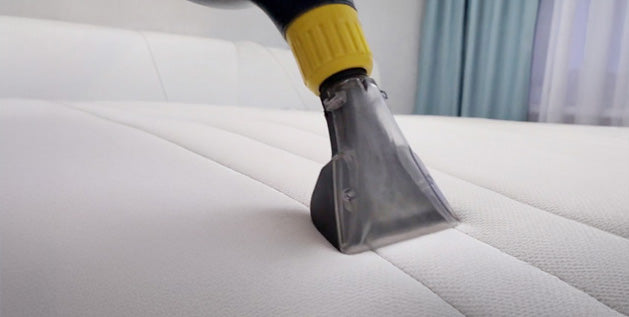
Vacuum the topper about once a month with a soft brush attachment to lift dust. If it has a removable cover, wash the cover according to its label. Foam and latex toppers themselves aren't machine washable; many fiberfill, cotton and some feather toppers are. Our guide to how to clean every type of mattress topper goes step by step.
Spot Cleaning
Deal with spills right away so they don't soak in. Blot (don't rub) with a sponge, cold water and a little mild detergent, then let the topper dry completely, flat and out of direct sun, before you remake the bed. On latex, skip bleach, hydrogen peroxide and harsh cleaners.
Airing Out
Air a new topper in a well-ventilated room if you notice a "new" smell; with foam, it usually fades within a few days. After that, leaving the bed uncovered for a while when you change the sheets is enough. Keep latex out of long direct sunlight: Turmerry's care guidance notes that "long exposure to direct sunlight, or heat above 85°F, breaks latex down and shortens its life."
Using a Protective Cover
A breathable, waterproof mattress protector placed over the topper and mattress, under your fitted sheet, keeps sweat and spills off both. A zip topper cover protects the topper itself and makes it easier to handle. On a Turmerry topper, one or the other is required from day one under the warranty.
Rotating Regularly
Turn the topper head-to-foot so it wears evenly. For a Turmerry latex topper, rotate it once a month for the first six months, then every 3 to 6 months. Flip it only if it's designed to be flipped, like our 4-inch topper. Our guide to caring for a latex mattress topper has more tips.
Moving and Storing
Lift a latex topper rather than dragging it, since latex can tear if it's pulled hard. Never fold, bend, roll or vacuum-compress a latex topper, not even for storage. Store it flat in a breathable cover, in a cool, dry place. Our guide to how to store a mattress topper explains how.

The Bottom Line
Choosing a mattress topper comes down to a few clear decisions. Start with the mattress underneath: if it's still flat and supportive, a topper can change how it feels; if it sags, a topper won't fix it. Then pick the material for the feel you want (memory foam to sink in, latex to rest on top, down, wool or fiber for a plush surface), the thickness for how big a change you need, and the firmness for your sleep position and body weight.
Finally, get the practical details right: the same size as your mattress, sheets deep enough for both, a cover or protector from day one, and a trial long enough to be sure. Questions about a Turmerry topper? Call us at 984-299-6850.
Quick checklist
- Check that your mattress is flat and supportive (no sagging)
- Name the change you want: softer, firmer, more cushioning, less motion, cooler feel
- Pick the material: hug (memory foam), lift (latex) or plush surface (fiber, down, wool)
- Choose thickness and firmness for your sleep position and body weight
- Buy the same size as your mattress, with sheets deep enough for both
- Use a cover or waterproof protector from day one, and buy with a real trial

Frequently Asked Questions

2 inch
Fine-tunes a mattress that is still supportive. Our most affordable option.
Soft, Medium, Firm or Extra Firm
$169.15 $199.00
3 inch Recommended
Our pick if you are unsure. Can change the feel of your mattress completely.
Soft, Medium, Firm or Extra Firm
$262.65 $309.00
4 inch, with cover
Two 2" layers in an organic cotton cover. Flip for soft or medium-firm. Most cushioning and pressure relief.
Soft/Medium flippable
$438.60 $516.00
Queen prices, lowest firmness option. Code BF15 is added at checkout; other sizes and firmness levels on the product page.
Early Access Black Friday Sale: 15% off7 Zone Organic Latex Mattress Topper
$84.15 $99.00From, with BF15
Get exclusive offers by email
Sale alerts and new sleep guides. Unsubscribe anytime.
Shop what's in this guide
 7 Zone Organic Latex Mattress$719.20
 7 Zone Organic Latex Mattress Topper$84.15
 Organic Waterproof Mattress Protector$50.15
 Organic Latex Pillow$83.30
Starting prices. Sale codes BF20 and BF15 are added at checkout.

Disclaimer: What is said in this article has been referenced from multiple sources and is intended only for educational and informational purposes. Please note that no content in this article is a substitute for professional advice from a qualified doctor or healthcare provider. Always consult an experienced doctor with any concerns you may have regarding a health condition or treatment, and never disregard any medical suggestions or delay in seeking treatment because of something you read here.
